There was an interesting interview of Chris Hitchens' widow that was published in npr.org. The content has certainly been altered after I first read it today morning. The original version had this specific description of a conversation during Hitchens' last days:
"...In Hitch's words, the same demand was made of him as his eyes were
closing. Do you wish to believe that Jesus Christ is the son of God?"
Hitchens' widow recalls that he was essentially asked the same question that was posed to Tom Paine when he was dying. This text is missing in the article now. I googled and found a preview of WGBH News version of that same interview. Here is the snapshot:
1. Why would such a question be asked of a person who was an outspoken supporter of atheism all his life, and poured scorn on the church and its 'saints' like Theresa? What is at stake here?
Answer: A fundamental Christian belief is that every human other than Jesus is born with a sexually-transmitted
defect that renders him or her, along their soul, a sinner destined for eternal damnation. This situation can only be remedied by 'third party intervention' via an affirmative answer to the quoted question (the body and it's soul are the first two parties and quite helpless on their own in this regard).
2. Does an affirmative answer to the quoted question instantly transform a non-believer into a permanent (until kingdom come, literally), bona-fide Christian?
Answer: Yes (getting Baptized is like getting a printed membership-card, perhaps).
Christianity, like other Abrahamic religions is history-centric', a term coined by Rajiv Malhotra in his book 'Being Different: An Indian Challenge to Western Universalism". A history-centric belief is time-dependent. To become a member of the Christian history-centric system, it is both necessary and sufficient (in an overwhelming majority of its denominations) to believe in a divine historical prior that consists of a finite and unique set of frozen events in the past that can never ever reoccur in the future. Church membership demands unquestionable affirmation of the 'Nicene Creed' in which the 'Jesus immaculately conceived as the son of God' clause is the center-piece. This is a binary condition: If you accept and believe this, you are in, otherwise you are out. This condition is readily accepted by all members regardless of whether he/she is a mild-mannered, jovial, and moderate person or a fanatic and zealous believer. Everything else, such as celebrating Christmas, etc., is optional. Notice that almost every ritual in Christianity is directed toward solidifying and reinforcing the history-centric belief that is enshrined in the Nicene Creed. Thus, in such a system, to merely think of Christ as a wise, kind, and great human being and act upon his message of love is insufficient; to think that you and your soul on your own can find 'salvation,' is unacceptable.
In direct contrast, if Hitchens were a member of a Dharmic thought system (another term coined by Rajiv Malhotra), he probably would
have found no conflict between that thought system and the way he lead most of his life in
search of truth, by following his Dharma. There is no history exam required to qualify as a Dharmic person.
Hitch's last temptation was to abdicate responsibility for a lifetime time of activity that was based a certain ethical value system in exchange for a shot at eternal, history-centric heaven. All it took was a mouse-click, a push of a button, or a nod of the head to discard that brief period of time which was already in the past and book his ticket to everlasting future happiness in history-centric heaven. Even in death, he recognized and rejected what he identified as silliness and performed his duty on this earth to the end. He is a true hero.
A Petri Dish clarifying his own thoughts while also analyzing the researcher. Exploration inspired by the book 'Being Different'. @IntegralUnity
Thursday, September 13, 2012
Tuesday, June 12, 2012
Analysis of History-Centrism: Landing Page
This is a landing page for ongoing research work that attempts to model History-Centric Thought Systems (HCTS), the nature of its membership and how it is likely to interact with thought systems that are not history-centric, as well as its impact on cultural diversity.
This is not a finished work of research. We are just getting warmed up! Comments, criticism, corrections welcome. Suggestions on how to take this analysis forward meaningfully (without getting too sidetracked into abstract modeling) would be appreciated.
History-Centrism is one of many key terms introduced by Rajiv Malhotra in his powerful new book 'Being Different' to counter claims of Western universalism by 'reversing the gaze' and analyzing their thought system based on a Dharmic (Indian) framework. Judeo-Christianity is an instance of a membership that subscribes to a HCTS in contrast with Indic schools of philosophy that focus on the inner sciences and are non-dual in nature.
1. Necessary/Sufficient Conditions for History-Centric membership
Stipulates the requirements for becoming a member of a HCTS or get disqualified using the concept of a historical prior. It follows from this formulation that HC implies duality (i.e. with mathematical certainty).
2. Impact of HC belief and duality on stability of HC membership
We analyze the stability of membership of a HCTS and show the stable equilibrium will probably never be reached if a unique non-reproducible prior belief drives the HCTS, i.e., it creates a "proselytize or perish" response to a chronic and self-induced existential question, even in the absence of any local competition.
3. Game-Theoretic analysis of History-centric conflicts & comparison with non-dual groups
Part-A: We differentiate between active and passive duality and attempt a game-theoretic analysis of the nature of resultant conflict between:
- two rival HCTS
- HCTS and non-HCTS
- two non-dual thought systems
and classify them accordingly. The results can provide insight on the response that can be adopted by a non-HCTS to survive in such contests that often tend to be characterized by asymmetric or one-sided payoffs.
Part-B: we study the decision choices available to the participants in such contexts and examine three cases.
4. History-Centrism and Monoculture: How HCTS has motivated the creation of a global master narrative of Western universalism that is the dominant contemporary monoculture. We look at examples of how the reductionism and digestion that characterize a monoculture can suffocate diversity and diminish the authenticity of experience.
Note: The material below has been added after this new model based on History-Centrism was first featured on Rajiv Malhotra's 'Being Different' book website.
5. Contradiction Networks: On how a HCTS model that is subjected to sustained scientific examination over a period of time is characterized by a maze ('network') of contradictions. The management of the HCTS spends more time trying to manage these chains/circuits of contradictions rather than eliminate it's logical source.
6. Duality masquerading as Advaita : As the HCTS model attempts to manage, rather than eliminate its inherent contradictions, it is forced to appropriate useful metaphysical as well as practical self-improvement methods from Dharmic Thought Systems to re-brand itself and project a new image.
7. A programmable model of the History-Centric soul: Unlike the Dharmic Atman, the HC soul is finite, time-limited, bounded, deterministic, and programmable, and also extremely unforgiving by design. The binary end-state / output of this model is only controllable by a third-party owner and depends purely on the keying in of a collectively valid and static input password / coupon rooted in history-centrism. The fear psychosis induced by such a design is arguably the biggest reason why many followers of HC faiths (e.g. Abrahamic religions) tend to relinquish membership after a while, and also why aggressive conversions continue to occur.
8. History Centrism in Western Mathematics: Mainstream western math and science is characterized by a relative over-reliance of historical reputation driven theorems and laws that were themselves based on axiomatic mathematical truth claims rooted in theology. In contrast, Dharmic systems focus on the empirical approach that allows one to re-experience the first discovery via first principles. Rather than rely solely on metaphysical truth, DTS recognizes a pluralism of analytical approaches to the same physical problem, and that a model representation may never be perfect and it is practically useful to not obsess about the unrepresentable that is not relevant to a given context. In the modern world of computing, internet, and artificial intelligence, the DTS based approach is proving its practical efficacy over abstract deductive methods that provide little real-world insight.
9. Yoga: Freedom from History. An attempt to understand the ideas behind Chapter 2 of the book"Being Different". Being history-centric is to be held hostage to some ancient historical prior that can never be authenticated. A double whammy effect of being history-centric is that any scope for salvation is possible only in the infinitely distant future beyond this life and cosmos. Consequently, such a person is unable to live in the present since the keys to happiness are tied to the past and the future, but never the current moment.
This is not a finished work of research. We are just getting warmed up! Comments, criticism, corrections welcome. Suggestions on how to take this analysis forward meaningfully (without getting too sidetracked into abstract modeling) would be appreciated.
History-Centrism is one of many key terms introduced by Rajiv Malhotra in his powerful new book 'Being Different' to counter claims of Western universalism by 'reversing the gaze' and analyzing their thought system based on a Dharmic (Indian) framework. Judeo-Christianity is an instance of a membership that subscribes to a HCTS in contrast with Indic schools of philosophy that focus on the inner sciences and are non-dual in nature.
1. Necessary/Sufficient Conditions for History-Centric membership
Stipulates the requirements for becoming a member of a HCTS or get disqualified using the concept of a historical prior. It follows from this formulation that HC implies duality (i.e. with mathematical certainty).
2. Impact of HC belief and duality on stability of HC membership
We analyze the stability of membership of a HCTS and show the stable equilibrium will probably never be reached if a unique non-reproducible prior belief drives the HCTS, i.e., it creates a "proselytize or perish" response to a chronic and self-induced existential question, even in the absence of any local competition.
3. Game-Theoretic analysis of History-centric conflicts & comparison with non-dual groups
Part-A: We differentiate between active and passive duality and attempt a game-theoretic analysis of the nature of resultant conflict between:
- two rival HCTS
- HCTS and non-HCTS
- two non-dual thought systems
and classify them accordingly. The results can provide insight on the response that can be adopted by a non-HCTS to survive in such contests that often tend to be characterized by asymmetric or one-sided payoffs.
Part-B: we study the decision choices available to the participants in such contexts and examine three cases.
4. History-Centrism and Monoculture: How HCTS has motivated the creation of a global master narrative of Western universalism that is the dominant contemporary monoculture. We look at examples of how the reductionism and digestion that characterize a monoculture can suffocate diversity and diminish the authenticity of experience.
Note: The material below has been added after this new model based on History-Centrism was first featured on Rajiv Malhotra's 'Being Different' book website.
5. Contradiction Networks: On how a HCTS model that is subjected to sustained scientific examination over a period of time is characterized by a maze ('network') of contradictions. The management of the HCTS spends more time trying to manage these chains/circuits of contradictions rather than eliminate it's logical source.
6. Duality masquerading as Advaita : As the HCTS model attempts to manage, rather than eliminate its inherent contradictions, it is forced to appropriate useful metaphysical as well as practical self-improvement methods from Dharmic Thought Systems to re-brand itself and project a new image.
7. A programmable model of the History-Centric soul: Unlike the Dharmic Atman, the HC soul is finite, time-limited, bounded, deterministic, and programmable, and also extremely unforgiving by design. The binary end-state / output of this model is only controllable by a third-party owner and depends purely on the keying in of a collectively valid and static input password / coupon rooted in history-centrism. The fear psychosis induced by such a design is arguably the biggest reason why many followers of HC faiths (e.g. Abrahamic religions) tend to relinquish membership after a while, and also why aggressive conversions continue to occur.
8. History Centrism in Western Mathematics: Mainstream western math and science is characterized by a relative over-reliance of historical reputation driven theorems and laws that were themselves based on axiomatic mathematical truth claims rooted in theology. In contrast, Dharmic systems focus on the empirical approach that allows one to re-experience the first discovery via first principles. Rather than rely solely on metaphysical truth, DTS recognizes a pluralism of analytical approaches to the same physical problem, and that a model representation may never be perfect and it is practically useful to not obsess about the unrepresentable that is not relevant to a given context. In the modern world of computing, internet, and artificial intelligence, the DTS based approach is proving its practical efficacy over abstract deductive methods that provide little real-world insight.
9. Yoga: Freedom from History. An attempt to understand the ideas behind Chapter 2 of the book"Being Different". Being history-centric is to be held hostage to some ancient historical prior that can never be authenticated. A double whammy effect of being history-centric is that any scope for salvation is possible only in the infinitely distant future beyond this life and cosmos. Consequently, such a person is unable to live in the present since the keys to happiness are tied to the past and the future, but never the current moment.
Labels:
Active Duality,
Being Different,
Game Theory,
History-Centrism
Monday, June 11, 2012
Yoga: Freedom from History
Chapter 2 of Rajiv Malhotra's book 'Being Different' is interestingly and curiously titled "Yoga: Freedom from History". This post tries to understand the meaning behind this title by examining the following questions. Many of the arguments used here are borrowed or paraphrased from passages in the aforementioned book.
1. What does freedom from history mean, and why would we even want such a freedom?
2. What has Yoga got to do with freedom? and what is the connection between Yoga and history?
Freedom from history and why it is incredibly useful
The 'history' that is alluded to here is closely related to 'history centrism', a term coined by Rajiv Malhotra in this book to describe thought systems whose fundamental rules are irreversibly tied to and completely dependent on a sense of collective history. The necessary and sufficient conditions for a human to become a member of a history-centric thought system (HCTS) based group (e.g. religion) is tied to whether they accept a specific historical prior associated with that HCTS (see the first few posts in this blog for complete details). The membership into this religious club is exclusive, i.e., a non-member is considered deficient and incapable of maximizing their potential on their own, since the core HCTS belief is that such a maximization is only possible by acceptance of the historical prior (e.g. Nicene Creed and the Christian church) and cannot happen in this lifetime.
To be free from history is to (among other things):
1. Reject this exclusivity that ties you to some collective history and allows you to embrace the notion of inclusiveness and non-duality (Advaita)
2. Take charge of your present and live in the present, and given your present state, your future is independent of any collective historical past. Among other things, this point hints at a (partially) Markovian view of life in Dharmic thought systems (more on this in a later post).
3. Believe that you, and equally importantly, any other person can maximize one's potential in this lifetime without depending on a past historical event or prophet. You are responsible for yourself and are naturally endowed with the amazing ability to maximize this potential in this world and in this lifetime, not in some infinitely distant and separated future time, and place.
Yoga and Freedom from history
Yoga is one of the ways of maximizing your potential in this lifetime and achieving the highest states of consciousness. If all historical records are lost today, HCTS systems (and their religions) would essentially disappear. For example, if all historical events known to man in the middle east and India are lost, all Abrahamic religions would cease to exist. However, all Dharmic (Indic) philosophy based religions (and every one recognizes the fundamental power of Yoga) would survive and regenerate itself over time since they are not history-centric. Yoga is an inner science that is repeatable, and does not depend on any kind of history, nor requires any kind of group membership. In short, a Yogi achieves freedom from history centrism and dogma. A key point to note is that while Dharmic thought systems (DTS) extensively use Itihaas (a word that very approximately resembles history, but is not the same as history) to motivate a Yogi, they are not tied to it nor are defined by it like HCTS are. For example, if all records of the Ramayana and Mahabharata were irretrievably lost, Hinduism would still be able to regenerate itself and continue to provide meaningful answers to an individual's problems via Yoga and 'embodied knowing'.
Is Yoga for everybody?
If dumbed-down and incorrectly treated as Pilates-like calisthenics like it is done extensively in the west, that Yogasana is for everybody, including a person who claims exclusivity via a HCTS, or a serial killer. However, Yogasana is but an aid to actual Yoga. Developing the ability to contort oneself into a double pretzel is certainly not the gateway to a higher state of consciousness. As we have seen earlier, Yoga is a scientific means of attaining freedom from ego, dogma and history-centrism, which means that a person cannot be a true Yogi unless they first and foremost let go of this exclusivity.
The contention here is that Yoga cannot be for those who claim exclusivity. For example, a baptized Christian who wears Indian garments, lights incense sticks, chants Hindu songs and Buddhist hymns, but swears by the historical prior encoded in the Nicene Creed can never be a true Yogi. On the other hand, consider a person in the west who worships Jesus as an Istha-Devta (favored icon of divinity), without claiming the historicity of Jesus as an exclusive savior, and believes in her own potential for divinity and ability to have the same Jesus-experience. She sheds exclusivity to free herself from the clutches of history-centrism and the notion of collective salvation and dogma, and can most certainly become a true Yogi. Thus the phrase 'Christian Yoga', or 'Jewish Yoga', or 'Islamic Yoga' is nothing but an oxymoron. In short, Yoga is not for everybody, but does not mean that any person or group can "own" Yoga, since that is akin to saying somebody "owns science". Hinduism and India arrived at Yoga first, and as long as due credit is given to this historical fact, Yoga, like open source science, is available to anybody, regardless of religious orientation. After all, Yoga delivers freedom from history! The silly Huffington-Post debate that perversely twisted this debate into one of "ownership" is an example of how even very knowledgeable people in the west are drowned in their history-centrism, and fall short in their attempts to understand the true idea of Yoga.
Yoga and Sanskrit
Sanskrit is the language of Yoga and the Sanskrit words chanted during Yogi are endowed with specific vibrations that are crucial toward attaining the highest levels of consciousness. The use of Sanskrit in Yoga is therefore not merely symbolic and many of the words used in Sanskrit in Yoga are non-translatable. For example, it is futile to replace 'Om' with words from the Torah, Bible, Koran, or some song book. They are absolutely not equivalent, and just plain silly.
1. What does freedom from history mean, and why would we even want such a freedom?
2. What has Yoga got to do with freedom? and what is the connection between Yoga and history?
Freedom from history and why it is incredibly useful
The 'history' that is alluded to here is closely related to 'history centrism', a term coined by Rajiv Malhotra in this book to describe thought systems whose fundamental rules are irreversibly tied to and completely dependent on a sense of collective history. The necessary and sufficient conditions for a human to become a member of a history-centric thought system (HCTS) based group (e.g. religion) is tied to whether they accept a specific historical prior associated with that HCTS (see the first few posts in this blog for complete details). The membership into this religious club is exclusive, i.e., a non-member is considered deficient and incapable of maximizing their potential on their own, since the core HCTS belief is that such a maximization is only possible by acceptance of the historical prior (e.g. Nicene Creed and the Christian church) and cannot happen in this lifetime.
To be free from history is to (among other things):
1. Reject this exclusivity that ties you to some collective history and allows you to embrace the notion of inclusiveness and non-duality (Advaita)
2. Take charge of your present and live in the present, and given your present state, your future is independent of any collective historical past. Among other things, this point hints at a (partially) Markovian view of life in Dharmic thought systems (more on this in a later post).
3. Believe that you, and equally importantly, any other person can maximize one's potential in this lifetime without depending on a past historical event or prophet. You are responsible for yourself and are naturally endowed with the amazing ability to maximize this potential in this world and in this lifetime, not in some infinitely distant and separated future time, and place.
Yoga and Freedom from history
Yoga is one of the ways of maximizing your potential in this lifetime and achieving the highest states of consciousness. If all historical records are lost today, HCTS systems (and their religions) would essentially disappear. For example, if all historical events known to man in the middle east and India are lost, all Abrahamic religions would cease to exist. However, all Dharmic (Indic) philosophy based religions (and every one recognizes the fundamental power of Yoga) would survive and regenerate itself over time since they are not history-centric. Yoga is an inner science that is repeatable, and does not depend on any kind of history, nor requires any kind of group membership. In short, a Yogi achieves freedom from history centrism and dogma. A key point to note is that while Dharmic thought systems (DTS) extensively use Itihaas (a word that very approximately resembles history, but is not the same as history) to motivate a Yogi, they are not tied to it nor are defined by it like HCTS are. For example, if all records of the Ramayana and Mahabharata were irretrievably lost, Hinduism would still be able to regenerate itself and continue to provide meaningful answers to an individual's problems via Yoga and 'embodied knowing'.
Is Yoga for everybody?
If dumbed-down and incorrectly treated as Pilates-like calisthenics like it is done extensively in the west, that Yogasana is for everybody, including a person who claims exclusivity via a HCTS, or a serial killer. However, Yogasana is but an aid to actual Yoga. Developing the ability to contort oneself into a double pretzel is certainly not the gateway to a higher state of consciousness. As we have seen earlier, Yoga is a scientific means of attaining freedom from ego, dogma and history-centrism, which means that a person cannot be a true Yogi unless they first and foremost let go of this exclusivity.
The contention here is that Yoga cannot be for those who claim exclusivity. For example, a baptized Christian who wears Indian garments, lights incense sticks, chants Hindu songs and Buddhist hymns, but swears by the historical prior encoded in the Nicene Creed can never be a true Yogi. On the other hand, consider a person in the west who worships Jesus as an Istha-Devta (favored icon of divinity), without claiming the historicity of Jesus as an exclusive savior, and believes in her own potential for divinity and ability to have the same Jesus-experience. She sheds exclusivity to free herself from the clutches of history-centrism and the notion of collective salvation and dogma, and can most certainly become a true Yogi. Thus the phrase 'Christian Yoga', or 'Jewish Yoga', or 'Islamic Yoga' is nothing but an oxymoron. In short, Yoga is not for everybody, but does not mean that any person or group can "own" Yoga, since that is akin to saying somebody "owns science". Hinduism and India arrived at Yoga first, and as long as due credit is given to this historical fact, Yoga, like open source science, is available to anybody, regardless of religious orientation. After all, Yoga delivers freedom from history! The silly Huffington-Post debate that perversely twisted this debate into one of "ownership" is an example of how even very knowledgeable people in the west are drowned in their history-centrism, and fall short in their attempts to understand the true idea of Yoga.
Yoga and Sanskrit
Sanskrit is the language of Yoga and the Sanskrit words chanted during Yogi are endowed with specific vibrations that are crucial toward attaining the highest levels of consciousness. The use of Sanskrit in Yoga is therefore not merely symbolic and many of the words used in Sanskrit in Yoga are non-translatable. For example, it is futile to replace 'Om' with words from the Torah, Bible, Koran, or some song book. They are absolutely not equivalent, and just plain silly.
Sunday, June 10, 2012
Being the Same and Being Different: The Paradox of Sameness
In the second installment of the series that explores the concept of 'Synthetic Unity' of the West versus the 'Integral Unity' of Dharmic India that was introduced by Rajiv Malhtora in his book 'Being Different', we focus on the alluring idea of 'sameness' that everybody loves to talk about (e.g. Aman Ki Asha :). We noted in the introductory article that a homogeneous "same" Pakistan has collapsed whereas a "all different" India has thrived. Similarly, Europe's relatively short-lived multiculturalism experiment is on the brink of failure while cultural diversity thrived in ancient India and has survived so far across centuries.
This leads to the following paradox:
On the surface, it is not unreasonable to expect that 'being different' that is so visible in India should naturally divide whereas the 'sameness' that is so visible in the west should unite. In fact, this was precisely the thought process that permeated and drove the U.S foreign policy toward the post-colonial subcontinent in the 1950s. In the book 'Being Different', Rajiv Malhotra notes that the then secretary of state John Dulles (as in Dulles airport, Washington D.C) backed a monotheistic Pakistan 'that was true to one master' over 'polytheistic' India that 'served many masters' and was thus deemed more likely to be unreliable and untrustworthy. However, when we dig deeper and get the root of the how humans react to multiculturalism, we notice that:
1. Every individual is different by birth and by circumstance. Given a pair of individuals who want to be "multicultural" in the western sense, when push comes to shove, the expectation is that the person deemed 'weaker' has to explicitly or implicitly admit inferiority and adopt the culture of the 'stronger' person and get digested. Both persons in the quest for sameness suffer from difference anxiety, the resolution of which ends in some form of violent conflict. This is a fundamental problem with expecting 'sameness'.
2. Difference anxiety caused by the need to enforce sameness in the west is a real issue. For example Brewer (1991) in a highly cited research article argues:
that the composition of an individual's social identity necessitates a trade-off between the need for assimilation and the need for differentiation. This is in contrast to previous models of social identity who assumed that individuals aim at maintaining some balanced level of similarity with other people on a uni dimensional similarity/dissimilarity scale.
The key implications of the theory lay in its dynamic aspects, as it is argued that individuals continuously take corrective actions to maintain an optimal compromise between the two needs. For instance, a person feeling too unique might achieve more assimilation by joining a group and making comparisons with in-group members (and finding similarities). Alternatively, a member of a large overly inclusive group might try achieve distinctiveness by making inter-group comparisons. Such actions are undertaken until the individual reaches an equilibrium, that is when his/her needs for assimilation and differentiation are equally activated.
As pointed out by Brewer (1999) in later work, this has implications for the study of prejudice and inter-group processes as one can ask if "in-group preference and loyalty can exist without spawning out-group fear or hostility"
3. Here is another example of difference anxiety in the American context: Morrison et al (2009) define multiculturalism as "the belief that racial and ethnic differences should be acknowledged and appreciated" and notes that such an objective "has been met with both positive reactions (e.g., decreased prejudice) and negative reactions (e.g., perceptions of threat) from dominant group members".
4. Such a unity achieved by birth-based discrimination, forcible or pressure-based digestion, submission, and fueled by difference anxiety rather than a mutually respectful debate is at best synthetic and tenuous and one that is constantly prone to fissure, while the goal of sameness remains elusive. In the Hindu epic Mahabharata, this inherent weakness of synthetic unity is demonstrated by the example of King Jarasandha, who was born in two halves at birth and spliced together, and grew to be among the strongest and the most ruthless kings in the world, yet was killed in single combat by Bhima (with the help of Krishna) by exploiting Jarasandha's synthetic unity.
5. To further explain the difference between Western synthetic unity and Dharmic Integral Unity, here is an interesting online article (thanks to @brazenpixy), where the author says:
"Separation causes uselessness, but much of Western civilization is based on separating the parts. One date is separate from another, history separate from math which is separate from biology. It's a world view we inherited from Newton and Descartes, so useful in many ways and disastrous in others. However, there has always been an alternative view of the universe as a single, totally interconnected system. You'll find that in Eastern traditions, American Transcendentalism, and at least some aspects of quantum physics."
6. In direct contrast, Dharmic thought systems are characterized by an integral unity that recognizes that infinite variations in the cosmos (specie, race, ethnicity, language, ..) are merely the manifestation of the same (and there is no "other"), and is thus able to accept and work with the multiplicity (Maya) in the universe without any stress or difference anxiety. India's multiculturalism has for milliennia been based on such Dharmic thought systems that share this fundamental concept, and it has worked pretty well. In other words, 'being different' is a more natural manifestation than 'being the same', and multiculturalism is achieved here by focusing on being equal while being different, which is best achieved via self-realization and mutual respect, rather than mere tolerance, external conversion, and digestion. Furthermore, as Rajiv Malhtora notes, being different is a powerful way of not being digested. Mahatma Gandhi's 'Hind Swaraj' also echoes this same idea, and he practiced 'being different' more than most in recent times.
7. The beautiful Sanskrit verse that best resolves this paradox of sameness and captures the essence of the Integral Unity of Dharmic India that spans the infinite multiplicity of the cosmos is given in the 'Being Different' book of Rajiv Malhotra (source used for Shloka and translation below is here):
Purnam-adah purnam-idam
purnaat purnam-udacyate.
purnasya purnam-aadaaya,
purnam-eva-avashishyate
That is infinite, this is infinite;
From that infinite this infinite comes.
From that infinite, this infinite removed or added;
Infinite remains infinite
This leads to the following paradox:
Why should 'being different' bring more cohesiveness than 'being the same' ?
On the surface, it is not unreasonable to expect that 'being different' that is so visible in India should naturally divide whereas the 'sameness' that is so visible in the west should unite. In fact, this was precisely the thought process that permeated and drove the U.S foreign policy toward the post-colonial subcontinent in the 1950s. In the book 'Being Different', Rajiv Malhotra notes that the then secretary of state John Dulles (as in Dulles airport, Washington D.C) backed a monotheistic Pakistan 'that was true to one master' over 'polytheistic' India that 'served many masters' and was thus deemed more likely to be unreliable and untrustworthy. However, when we dig deeper and get the root of the how humans react to multiculturalism, we notice that:
1. Every individual is different by birth and by circumstance. Given a pair of individuals who want to be "multicultural" in the western sense, when push comes to shove, the expectation is that the person deemed 'weaker' has to explicitly or implicitly admit inferiority and adopt the culture of the 'stronger' person and get digested. Both persons in the quest for sameness suffer from difference anxiety, the resolution of which ends in some form of violent conflict. This is a fundamental problem with expecting 'sameness'.
2. Difference anxiety caused by the need to enforce sameness in the west is a real issue. For example Brewer (1991) in a highly cited research article argues:
that the composition of an individual's social identity necessitates a trade-off between the need for assimilation and the need for differentiation. This is in contrast to previous models of social identity who assumed that individuals aim at maintaining some balanced level of similarity with other people on a uni dimensional similarity/dissimilarity scale.
The key implications of the theory lay in its dynamic aspects, as it is argued that individuals continuously take corrective actions to maintain an optimal compromise between the two needs. For instance, a person feeling too unique might achieve more assimilation by joining a group and making comparisons with in-group members (and finding similarities). Alternatively, a member of a large overly inclusive group might try achieve distinctiveness by making inter-group comparisons. Such actions are undertaken until the individual reaches an equilibrium, that is when his/her needs for assimilation and differentiation are equally activated.
As pointed out by Brewer (1999) in later work, this has implications for the study of prejudice and inter-group processes as one can ask if "in-group preference and loyalty can exist without spawning out-group fear or hostility"
3. Here is another example of difference anxiety in the American context: Morrison et al (2009) define multiculturalism as "the belief that racial and ethnic differences should be acknowledged and appreciated" and notes that such an objective "has been met with both positive reactions (e.g., decreased prejudice) and negative reactions (e.g., perceptions of threat) from dominant group members".
4. Such a unity achieved by birth-based discrimination, forcible or pressure-based digestion, submission, and fueled by difference anxiety rather than a mutually respectful debate is at best synthetic and tenuous and one that is constantly prone to fissure, while the goal of sameness remains elusive. In the Hindu epic Mahabharata, this inherent weakness of synthetic unity is demonstrated by the example of King Jarasandha, who was born in two halves at birth and spliced together, and grew to be among the strongest and the most ruthless kings in the world, yet was killed in single combat by Bhima (with the help of Krishna) by exploiting Jarasandha's synthetic unity.
5. To further explain the difference between Western synthetic unity and Dharmic Integral Unity, here is an interesting online article (thanks to @brazenpixy), where the author says:
"Separation causes uselessness, but much of Western civilization is based on separating the parts. One date is separate from another, history separate from math which is separate from biology. It's a world view we inherited from Newton and Descartes, so useful in many ways and disastrous in others. However, there has always been an alternative view of the universe as a single, totally interconnected system. You'll find that in Eastern traditions, American Transcendentalism, and at least some aspects of quantum physics."
6. In direct contrast, Dharmic thought systems are characterized by an integral unity that recognizes that infinite variations in the cosmos (specie, race, ethnicity, language, ..) are merely the manifestation of the same (and there is no "other"), and is thus able to accept and work with the multiplicity (Maya) in the universe without any stress or difference anxiety. India's multiculturalism has for milliennia been based on such Dharmic thought systems that share this fundamental concept, and it has worked pretty well. In other words, 'being different' is a more natural manifestation than 'being the same', and multiculturalism is achieved here by focusing on being equal while being different, which is best achieved via self-realization and mutual respect, rather than mere tolerance, external conversion, and digestion. Furthermore, as Rajiv Malhtora notes, being different is a powerful way of not being digested. Mahatma Gandhi's 'Hind Swaraj' also echoes this same idea, and he practiced 'being different' more than most in recent times.
7. The beautiful Sanskrit verse that best resolves this paradox of sameness and captures the essence of the Integral Unity of Dharmic India that spans the infinite multiplicity of the cosmos is given in the 'Being Different' book of Rajiv Malhotra (source used for Shloka and translation below is here):
Purnam-adah purnam-idam
purnaat purnam-udacyate.
purnasya purnam-aadaaya,
purnam-eva-avashishyate
That is infinite, this is infinite;
From that infinite this infinite comes.
From that infinite, this infinite removed or added;
Infinite remains infinite
Labels:
Active Duality,
Advaita,
Being Different,
cultural diversity,
Dharma,
Gandhi,
Integral Unity,
multiculturalism,
paradox,
Purna,
Rajiv Malhotra,
Synthetic Unity
Sunday, May 27, 2012
On why Multiculturalism usually doesn't work - Part 1
We kick off the next series of articles that explore the contrasting effects of the 'Synthetic Unity' that defines the west and the 'Integral Unity' that defines India, as discussed in Chapter 3 of the book 'Being Different' (BD) by Rajiv Malhotra. The first three posts in this series serve to motivate and provide contemporary real-world examples that highlight the importance of these concepts by building upon an article "A Working Model for Multiculturalism" that is linked in the articles section of 'Being Different' website.
The author of that post primarily analyzes multiculturalism in a localized office workspace scenario and presents two main arguments:
a. 'Zero' tolerance (or mere tolerance) policy of a company is at best a necessary condition for establishing a multicultural workplace, but one that in itself is insufficient.
b. Mutual respect is a necessary and sufficient condition for achieving a stable, working multicultural solution.
Our post attempts to use these two findings as a starting point and extend them as follows:
1. Apply the idea of 'mutual respect' to a more general setting that goes beyond a local workplace where everybody is typically bound legally by a strict corporate policy.
2. The paradox of sameness.
3. Examine alternative theories developed in the West and contrast it with BD's mutual respect
In the west, multiculturalism experiments have invariably failed because of the lack of mutual respect, which if present, actually encourages multiculturalism and diversity. The United States fares a little better due to the combination of the bill of rights, Abraham Lincoln's legacy, and crucially, the Dharmic Gandhi inspired civil rights movement of Dr. Martin Luther King, but it is not a done deal yet.
Multiculturalism Works When There is Mutual Respect
Rajiv Malhotra in his book 'Being Different' highlights the importance of mutual respect (MR). MR possesses what can be called a multi-layered meaning. The first level is pretty straight forward: you respect me, I respect you, and we get along. Even at this macro-level, MR is superior to tolerance that says: either one or both of us tolerate each other, and we somehow get along. However, MR does not just stop there. Tolerance implies either a single unidirectional relationship (I'm superior and tolerate you) or two one-way relationships filled with anxiety (I tolerate you, and you tolerate me). MR implies a single bi-directional bond based on permanent equality, i.e. our respect for each other must be mutual or not at all, unlike tolerance that is characterized by one or more one-way relationships based on the (seemingly paradoxical) centrifugal notion of sameness. Let's apply these implications of tolerance and MR to a multicultural situation:
Scenario1. In Europe, many leaders have accepted that multiculturalism has either failed or doomed to fail. Why? Our argument: because it is based on tolerance. Both parties want sameness, but the question then is which party must transform to achieve this objective? This requires that either Islamic immigrants adopt the Judeo-Christian/Atheist west's norm, or the West embraces dogmatic Islam. In other words, one of the parties must be digested by the other, but given the irreconcilable differences in the predominantly history-centric thought systems (Islam, Judeo-Christianity, Atheism: see previous blog posts for a detailed discussion of our history-centric modeling approach) neither of these options are really realizable. Instead, the Western governments have set up policies that aim to superficially placate Islam to an extent, and in response, the immigrants have likewise compromised cosmetically to tolerate Western 'decadence'. Not surprisingly, this has resulted in a stalemate characterized by a permanent state of difference anxiety, which can lead to occasional bouts of extreme violence from both parties. Our most recent post on the Virginia Tech and Oikos University shootings argues that the root cause was difference anxiety.
Scenario2. In contrast, look at India prior to Islamic invasions, a subcontinent where multiculturalism is not just an option, there is really no option but multiculturalism. It worked remarkably well for a couple of thousand years until about 800 years of barbaric foreign occupation that only ended 65 years ago. The key reason was that the prevailing Dharmic thought system strongly emphasized mutual respect. Every cultural variation was deemed equally valid, regardless of its geography (North v South or East v West), or it's sub-Dharmic category (Buddhism, Jainism, or Hinduism) and diversity was embraced as a manifestation of the divine (A beautiful article here explains that in a Dharmic thought system, the question was not whether there was one or many gods, because there is only god !!). In game theoretic terms, multiculturalism based on tolerance in Europe veers toward a zero-sum game with each party waiting to see who blinks first, whereas in ancient India, multiculturalism based on mutual respect resulted in a stable and peaceful non-zero sum outcome, where ideas were challenged extremely vociferously but scientifically and rationally via Purva-Paksha debates, obviating the need for state-sponsored bans or violent crusades. Incredibly, a large portion of that Dharma-generated mutual respect still remains intact in contemporary India, and is perhaps the only reason why a hugely diverse India has thrived whereas a monotheistic and apparently homogenous Pakistan has not. However, as non-Dharmic thought systems gain strength (fed by foreign-sponsors and their Indian supporters), we are beginning to see a breakdown of this stable multiculturalism in peacetime India, and one can discern a switch in the language that, increasingly like Europe, talks of compromise and tolerance rather than genuine mutual respect. The outcome of a continued breakdown is not hard to predict.
Why was the outcome of scenario-1, despite the unity via their common Abrahamic ancestry, an unstable stalemate, whereas the result in scenario-2, characterized by amazingly diverse groups of people, mutually beneficial stability? Why does the former produce and rely on mere tolerance and the latter, mutual respect? Part of the answer lies in the contrast between synthetic unity and integral unity, which we will explore in the next post by examining, what we propose and coin, the paradox of sameness.
As always, this blog is a work in progress and is intended to be used as a resource and reference. Updated text, corrections, and new links will show up as time progresses.
The author of that post primarily analyzes multiculturalism in a localized office workspace scenario and presents two main arguments:
a. 'Zero' tolerance (or mere tolerance) policy of a company is at best a necessary condition for establishing a multicultural workplace, but one that in itself is insufficient.
b. Mutual respect is a necessary and sufficient condition for achieving a stable, working multicultural solution.
Our post attempts to use these two findings as a starting point and extend them as follows:
1. Apply the idea of 'mutual respect' to a more general setting that goes beyond a local workplace where everybody is typically bound legally by a strict corporate policy.
2. The paradox of sameness.
3. Examine alternative theories developed in the West and contrast it with BD's mutual respect
In the west, multiculturalism experiments have invariably failed because of the lack of mutual respect, which if present, actually encourages multiculturalism and diversity. The United States fares a little better due to the combination of the bill of rights, Abraham Lincoln's legacy, and crucially, the Dharmic Gandhi inspired civil rights movement of Dr. Martin Luther King, but it is not a done deal yet.
Multiculturalism Works When There is Mutual Respect
Rajiv Malhotra in his book 'Being Different' highlights the importance of mutual respect (MR). MR possesses what can be called a multi-layered meaning. The first level is pretty straight forward: you respect me, I respect you, and we get along. Even at this macro-level, MR is superior to tolerance that says: either one or both of us tolerate each other, and we somehow get along. However, MR does not just stop there. Tolerance implies either a single unidirectional relationship (I'm superior and tolerate you) or two one-way relationships filled with anxiety (I tolerate you, and you tolerate me). MR implies a single bi-directional bond based on permanent equality, i.e. our respect for each other must be mutual or not at all, unlike tolerance that is characterized by one or more one-way relationships based on the (seemingly paradoxical) centrifugal notion of sameness. Let's apply these implications of tolerance and MR to a multicultural situation:
Scenario1. In Europe, many leaders have accepted that multiculturalism has either failed or doomed to fail. Why? Our argument: because it is based on tolerance. Both parties want sameness, but the question then is which party must transform to achieve this objective? This requires that either Islamic immigrants adopt the Judeo-Christian/Atheist west's norm, or the West embraces dogmatic Islam. In other words, one of the parties must be digested by the other, but given the irreconcilable differences in the predominantly history-centric thought systems (Islam, Judeo-Christianity, Atheism: see previous blog posts for a detailed discussion of our history-centric modeling approach) neither of these options are really realizable. Instead, the Western governments have set up policies that aim to superficially placate Islam to an extent, and in response, the immigrants have likewise compromised cosmetically to tolerate Western 'decadence'. Not surprisingly, this has resulted in a stalemate characterized by a permanent state of difference anxiety, which can lead to occasional bouts of extreme violence from both parties. Our most recent post on the Virginia Tech and Oikos University shootings argues that the root cause was difference anxiety.
Scenario2. In contrast, look at India prior to Islamic invasions, a subcontinent where multiculturalism is not just an option, there is really no option but multiculturalism. It worked remarkably well for a couple of thousand years until about 800 years of barbaric foreign occupation that only ended 65 years ago. The key reason was that the prevailing Dharmic thought system strongly emphasized mutual respect. Every cultural variation was deemed equally valid, regardless of its geography (North v South or East v West), or it's sub-Dharmic category (Buddhism, Jainism, or Hinduism) and diversity was embraced as a manifestation of the divine (A beautiful article here explains that in a Dharmic thought system, the question was not whether there was one or many gods, because there is only god !!). In game theoretic terms, multiculturalism based on tolerance in Europe veers toward a zero-sum game with each party waiting to see who blinks first, whereas in ancient India, multiculturalism based on mutual respect resulted in a stable and peaceful non-zero sum outcome, where ideas were challenged extremely vociferously but scientifically and rationally via Purva-Paksha debates, obviating the need for state-sponsored bans or violent crusades. Incredibly, a large portion of that Dharma-generated mutual respect still remains intact in contemporary India, and is perhaps the only reason why a hugely diverse India has thrived whereas a monotheistic and apparently homogenous Pakistan has not. However, as non-Dharmic thought systems gain strength (fed by foreign-sponsors and their Indian supporters), we are beginning to see a breakdown of this stable multiculturalism in peacetime India, and one can discern a switch in the language that, increasingly like Europe, talks of compromise and tolerance rather than genuine mutual respect. The outcome of a continued breakdown is not hard to predict.
Why was the outcome of scenario-1, despite the unity via their common Abrahamic ancestry, an unstable stalemate, whereas the result in scenario-2, characterized by amazingly diverse groups of people, mutually beneficial stability? Why does the former produce and rely on mere tolerance and the latter, mutual respect? Part of the answer lies in the contrast between synthetic unity and integral unity, which we will explore in the next post by examining, what we propose and coin, the paradox of sameness.
As always, this blog is a work in progress and is intended to be used as a resource and reference. Updated text, corrections, and new links will show up as time progresses.
Friday, April 13, 2012
Virginia Tech and Oikos University Massacres: Was Difference Anxiety the Root Cause?
In this post, we uncover two eerily similar and horrific examples of the impact of difference anxiety that history-centric thought systems have injected into their captive followers minds. 'Difference Anxiety' is a powerful phrase introduced by Rajiv Malhotra in his recent book 'Being Different'.
April 16, 2012 will mark the five-year anniversary of the horrific massacre of innocent students and faculty at Virginia Tech in Blacksburg, Virginia. On this day in 2007, a deranged student walked around the idyllic VT campus and classrooms murdering 32 people (one of whom was a friend) and wounding 25 more before committing suicide.
April 2, 2012: Another deranged gunman, an ex-student of the Oikos University (OU) in West Oakland, California shot and killed seven and wounded more before being captured. These two attacks are numerically among the three worst campus massacres in the history of the United States. Here are the commonalities between these two April killers. Neither the American nor the international media have investigated these cases from this angle so far, to the best of my knowledge.
There is also first-hand evidence that suggests Seung's total disillusionment with Church dogma and the gender difference anxiety issues (in this case manifested via his 'girl's' name and his stalking of females in the campus) that afflict quite a few of its adherents.
OU is a private Korean Christian university in Oakland, California. It should be no surprise that it is affiliated with the Evangelical Praise God Korean Presbyterian Church in Oakland. OU is reported in the media as primarily a nursing school, but a deeper look shows that its curriculum includes a strong dose of Christian Dogma. Aside from the language anxiety problem that Goh faced, we perhaps see his gender anxiety issue surface once again: the local police chief indicates that "Goh went to Oikos with "the intent of locating a female administrator but when learning she was not there, he opened fire at random people". Another example is Goh extolling his masculinity by glorifying violence. Note the predominantly female population in OU (and his victims). We also see that the reports mention that Goh was disillusioned and angry with the management of OU and had a score to settle with them, and appears to have picked on innocent women as an alternative target to vent his fury. After the event, we notice the local Korean church community "calling for unity" and closing ranks.
Main Culprit: Difference Anxiety?
These are glaring recent examples where the History-Centric Christian dogma in the west has failed to provide sustainable solutions to their youthful followers in dire need of scientifically uplifting and healing help and peace of mind. The Church response is typically dogmatic and the option is to simply to "pray" or ingest side-effects-filled drugs prescribed by doctors. Neither of these solutions address the fundamental issue of Difference Anxiety faced by people from non-western cultures as well as by some in the west toward these visitors. The conclusions of the official VT massacre report lays the final blame on the young killer for not seeking help. Furthermore, in history-centric populations where such anxious youth mingle, there is little or no scope for mutual respect and equality based on recognizing and accepting these differences, and the relationship is based more on the patronizing and unsustainable notion of tolerance, with the aim of eventually erasing such differences. In both cases, we see this occur. Informal conversations with friends in Singapore and other parts of East Asia indicate that the phenomenon of such a gender difference anxiety among some of their peoples there may be widespread, and as is well argued in the recent book 'Being Different', my postulate is that this gender anxiety was not prevalent when Confucianism and Buddhist Dharma dominated Korea, and is almost surely a recent product of History-Centric thought via the Evangelical church that has a dogmatic (western universal) and warped notion of masculinity and femininity. This condition seems to been reinforced at an early age in the killers minds and maybe worsened after immigration into a completely western society.
Cultural Genocide by the Evangelist Christian Church
The two above examples are emblematic of the failures of Church over many centuries in coming up with an uplifting self-realization and self-help methods like the Yoga and meditation of Hinduism, Jainism and Buddhism of Dharmic India and Asia for their followers, coupled with its disdain for such inner sciences, which they are now trying to misappropriate into their dogma given the increasing popularity of Yoga in the west. To make matters worse, the church is marketing this failed product to non-western cultures using their predatory and cynical practice of inculturation and digestion wherein they convert native populations to Christianity by deceitful incorporation of popular elements of local tradition (Korean example), but without ever getting rid of their dogma and History-Centrism. Korea is a prime example where Western Evangelists with tacit approval from their governments have destroyed the cultural fabric of South Korea and created a huge deracinated population. 43% of South Korea now follow Evangelist Christian dogma, where there were close to 0% just a couple of centuries back. This is nothing short of cultural genocide and these very same Evangelists are targeting India in exactly the same manner. How many Chos and Gohs will that produce?
We close this post by praying for the Dharmic Atmans of the victims of these horrific crimes. The Atman is infinite and eternal. Om, Shanti, Shanti, Shanti!
April 16, 2012 will mark the five-year anniversary of the horrific massacre of innocent students and faculty at Virginia Tech in Blacksburg, Virginia. On this day in 2007, a deranged student walked around the idyllic VT campus and classrooms murdering 32 people (one of whom was a friend) and wounding 25 more before committing suicide.
April 2, 2012: Another deranged gunman, an ex-student of the Oikos University (OU) in West Oakland, California shot and killed seven and wounded more before being captured. These two attacks are numerically among the three worst campus massacres in the history of the United States. Here are the commonalities between these two April killers. Neither the American nor the international media have investigated these cases from this angle so far, to the best of my knowledge.
The VT Killer
Seung-Hui Cho, was born in South Korea in a family that seems to have disavowed the pluralist native philosophical traditions of Korea and embraced Christian Church Dogma and were zealous church goers after they emigrated to the United States. Based on the feedback from the community in Korea and his uneasy elationship with family and community in Virgnia, there are strong indicators that that his deracinated upbringing where his family discarded their age old Confucian beliefs and adopted an aggressive Evangelist Church dogma contributed toward maintaining this confused state of mind. We can conclude that he had issues with his name because it sounded like a girl's name based on the evidence of his uncle Kim in Korea who said "But when I heard that it happened in Virginia, where my sister lived, and the name was Seung Hui, I knew. He has a girl's name - Seung Hui is a rare name for a man". In the US, an evangelist pastor at a Korean church in Centerville, Virginia, where Cho grew up, told the JoongAng Ilbo newspaper he had once advised Cho's mother to take him to a doctor to check for autism. The mother disagreed, but prayed in church for her son to crawl out of his shell"There is also first-hand evidence that suggests Seung's total disillusionment with Church dogma and the gender difference anxiety issues (in this case manifested via his 'girl's' name and his stalking of females in the campus) that afflict quite a few of its adherents.
The OU Killer
One L. Goh is also a native of South Korea. His family too uprooted him from his native place and immigrated to the United States when he was a kid, interestingly, to the same geographical area of the VT shooting, Southwest Virginia. He was extremely uncomfortable with his name because it sounded like a girl's name and actually went ahead and changed it. Sounds familiar?OU is a private Korean Christian university in Oakland, California. It should be no surprise that it is affiliated with the Evangelical Praise God Korean Presbyterian Church in Oakland. OU is reported in the media as primarily a nursing school, but a deeper look shows that its curriculum includes a strong dose of Christian Dogma. Aside from the language anxiety problem that Goh faced, we perhaps see his gender anxiety issue surface once again: the local police chief indicates that "Goh went to Oikos with "the intent of locating a female administrator but when learning she was not there, he opened fire at random people". Another example is Goh extolling his masculinity by glorifying violence. Note the predominantly female population in OU (and his victims). We also see that the reports mention that Goh was disillusioned and angry with the management of OU and had a score to settle with them, and appears to have picked on innocent women as an alternative target to vent his fury. After the event, we notice the local Korean church community "calling for unity" and closing ranks.
Main Culprit: Difference Anxiety?
These are glaring recent examples where the History-Centric Christian dogma in the west has failed to provide sustainable solutions to their youthful followers in dire need of scientifically uplifting and healing help and peace of mind. The Church response is typically dogmatic and the option is to simply to "pray" or ingest side-effects-filled drugs prescribed by doctors. Neither of these solutions address the fundamental issue of Difference Anxiety faced by people from non-western cultures as well as by some in the west toward these visitors. The conclusions of the official VT massacre report lays the final blame on the young killer for not seeking help. Furthermore, in history-centric populations where such anxious youth mingle, there is little or no scope for mutual respect and equality based on recognizing and accepting these differences, and the relationship is based more on the patronizing and unsustainable notion of tolerance, with the aim of eventually erasing such differences. In both cases, we see this occur. Informal conversations with friends in Singapore and other parts of East Asia indicate that the phenomenon of such a gender difference anxiety among some of their peoples there may be widespread, and as is well argued in the recent book 'Being Different', my postulate is that this gender anxiety was not prevalent when Confucianism and Buddhist Dharma dominated Korea, and is almost surely a recent product of History-Centric thought via the Evangelical church that has a dogmatic (western universal) and warped notion of masculinity and femininity. This condition seems to been reinforced at an early age in the killers minds and maybe worsened after immigration into a completely western society.
Cultural Genocide by the Evangelist Christian Church
The two above examples are emblematic of the failures of Church over many centuries in coming up with an uplifting self-realization and self-help methods like the Yoga and meditation of Hinduism, Jainism and Buddhism of Dharmic India and Asia for their followers, coupled with its disdain for such inner sciences, which they are now trying to misappropriate into their dogma given the increasing popularity of Yoga in the west. To make matters worse, the church is marketing this failed product to non-western cultures using their predatory and cynical practice of inculturation and digestion wherein they convert native populations to Christianity by deceitful incorporation of popular elements of local tradition (Korean example), but without ever getting rid of their dogma and History-Centrism. Korea is a prime example where Western Evangelists with tacit approval from their governments have destroyed the cultural fabric of South Korea and created a huge deracinated population. 43% of South Korea now follow Evangelist Christian dogma, where there were close to 0% just a couple of centuries back. This is nothing short of cultural genocide and these very same Evangelists are targeting India in exactly the same manner. How many Chos and Gohs will that produce?
We close this post by praying for the Dharmic Atmans of the victims of these horrific crimes. The Atman is infinite and eternal. Om, Shanti, Shanti, Shanti!
Labels:
Church Dogma,
deracination,
Difference Anxiety,
Gender Anxiety,
Korean,
Oikos University,
South Korea,
Virginia Tech
Saturday, April 7, 2012
History-Centrism in Western Mathematics
This post (as always a work in progress, so check back occasionally) has two objectives:
1. Recognize the History-centric (HC) aspects of mainstream Western mathematics from a reading of Dr. C. K. Raju's essay on "Zeroism and Calculus without Limits"
2. Attempt an original extension of the ideas and conclusions in this paper in terms of our HC thought system (HCTS) Model (History-Centrism is a term coined by Rajiv Malhotra in a recent book. See prior blog posts for complete details).
b. Dr. Raju then takes on the 'question of time'. Here he cites his book 'The Eleven Pictures of Time' that shows how truth-claims with respect to time are fundamental to Abrahamic religions, value systems, and science, and in particular, the religious aspects of the truth claim and its assertion of universality has created a few problems (I haven't read the book yet, so I can't comment).
c. A case is made for the 'history-laundering' of Calculus by the Church where Dr. Raju notes "the fact is that the calculus developed in India, over a thousand years, in response to the clear economic need of monsoon-driven agriculture. Just as “Arabic numerals” and related Indian algorithms were imported in Europe by Florentine merchants, the calculus was imported in Europe due to the clear economic need of an economy driven by overseas trade, and the difficulties of (and specific to) European navigation".
To summarize the introduction of the paper, the Western truth claims over the nature of time and the history-centrism injected into science (Calculus is shown as a prominent example where much of the complexity of learning and teaching it is really an artifact of such an intervention) has created a few problems. This situation is next contrasted with the approach taken in Dharmic Thought Systems (DTS, specifically Buddhism):
d. Buddhist logic or Catuskoti is that of four alternatives: This, Not This, Both This And Not This, Neither This Or Not This. Obviously this is incompatible with the two-valued logic that is exclusively used in the west. India also has another alternative in the Jaina school, Syadavada that allows seven alternatives. Dr. Raju notes that the two-valued logic was also known in India for a very long time, so calling it 'Aristotelian' may be inaccurate. Thus, we find in India a diversity of logical traditions based on empirical evidence in contrast with "this is the only way" approach that characterizes mainstream Western math. Dr. Raju summarizes this situation thus: "one cannot appeal to empirical experience to support the current use of 2-valued logic in formal mathematics. Thus, formal mathematics prides itself on being entirely metaphysical".
e. Thus we have a clash of approaches. A diverse, empirical based logic schools of India, and the metaphysics-justified two-valued logic of mainstream West. What is the impact of this choice on the science that comes out the respective schools of thought? There is an argument to be made that “deduction (West) is less certain than induction (Indic)”.
f. The coup-de-grace of this paper is delivered via a brilliant and useful interpretation of the Buddhist notion of Sunyavada as 'Zeroism (rather than null or zero) as follows "The understanding,
therefore, is that sunya does not simply mean emptiness or void, sunya refers to the nonrepresentable part which is ignored or zeroed in a representation. The meaningful
statement that every representation leaves out some non-representable elements, should not be converted into the meaningless statement that everything is void".
g. The author then goes into an in-depth discussion (that is beyond the scope of this post for the time being) of the practically beneficial properties of Zeroism, in particular noting that Calculus taught without limits and supertasks, and based on first order differential equations is a better alternative, both practically and from the point of view of pedagogy, and in this age of the computers and internet, 'there is no doubt' that the latter way is the superior and rational approach.
1. Pluralism: There are multiple ways of analyzing and interpreting a given physical problem. No claim on universality of a "historic law" and standardization needs to be made with respect to one particular approach, although each student may have their own favorite approach. Thus a DTS-based society was able to come up with 2, 4, and 7 valued logical outcome models. The practical value of such alternative non-western approaches may well become critical in the future as the speed of computer systems (e.g. quantum computing) goes up and the quality of artificial intelligence techniques increase.
2. Unlike mainstream western deduction which relies on abstraction, i.e. 'one-time perfect deductive proof given by reputed expert, then blindly invoke this theorem forever', DTS encourages empirical verification every time we are confronted with a new problem context, thereby requiring the student or practitioner to understand the intricacies in the posed problem in-depth, and from first principles. More recently in the west, the practice of geometrical construction-based proofs for theorems has regained traction and a few complex proofs in computer science and math are 'computer-assisted' nowadays, bypassing the need for a reputed deduction-centric human expert.
3. DTS allows for and accounts for a realistic level of uncertainty and probability in mathematical modeling and allows for more logical outcomes than the perfectly deterministic "Aristotelian law of the excluded middle" abstraction.
4. DTS encourages a student to re-experience and reproduce a first scientific discovery by empirical verification from scratch taking Zeroism into account, rather than just dogmatically relying on the 'expert guarantee' of the first (western-legitimized) discoverer.
Conclusions
The western quest for perfection via an absolute metaphysical truth in a math representation and based on supertasks has never really worked in practice. Approximation, round-off error, and neglecting that which is not useful in a context is reality and therefore there is often a considerable gap between a 'perfect math model' on paper and its computer translation that renders the former to be often worthless in terms of providing any practical insight. Futhermore, we observe an unbridgeable duality of "theoretical math" versus "applied math" in the west, which to the best of my knowledge was not present in ancient Indian DTS society where the need for such a binary categorization of theory versus practice never really arose. Among the most famous and important quotes as far as mathematical models is "All models are wrong, but some are useful". In other words, there may well be no perfect representation of some processes (Sunyavada), and it is more important to focus on the usefulness and practical value of such representations in the given context. In fact, this approach is the cornerstone of Analytics, the ongoing revolution in the world of data-driven applied math modeling, computerized decision optimization, and prediction. Students and engineers who can recognize, and more importantly, apply these Indian and Dharmic thoughts and concepts stand to gain a competitive edge over their competitors in the global technical workplace.
1. Recognize the History-centric (HC) aspects of mainstream Western mathematics from a reading of Dr. C. K. Raju's essay on "Zeroism and Calculus without Limits"
2. Attempt an original extension of the ideas and conclusions in this paper in terms of our HC thought system (HCTS) Model (History-Centrism is a term coined by Rajiv Malhotra in a recent book. See prior blog posts for complete details).
Part 1: History-Centrism in Mainstream Western Math
a. Dr. Raju notes that not much is known about Euclid to this day although the work 'Elements' has attributed to him, and he has become well-recognized via the popular term "Euclidean geometry". Dr. Raju uses this example as symptomatic of the general pattern of attempts by the church to seek non-Indian and non-Arabic foundations for Western science to make his point that science and Abrahamic religion in the west has been closely linked for a long time and says "the difficulty in understanding quantum mechanics is primarily due to the excess baggage of theology in science".b. Dr. Raju then takes on the 'question of time'. Here he cites his book 'The Eleven Pictures of Time' that shows how truth-claims with respect to time are fundamental to Abrahamic religions, value systems, and science, and in particular, the religious aspects of the truth claim and its assertion of universality has created a few problems (I haven't read the book yet, so I can't comment).
c. A case is made for the 'history-laundering' of Calculus by the Church where Dr. Raju notes "the fact is that the calculus developed in India, over a thousand years, in response to the clear economic need of monsoon-driven agriculture. Just as “Arabic numerals” and related Indian algorithms were imported in Europe by Florentine merchants, the calculus was imported in Europe due to the clear economic need of an economy driven by overseas trade, and the difficulties of (and specific to) European navigation".
To summarize the introduction of the paper, the Western truth claims over the nature of time and the history-centrism injected into science (Calculus is shown as a prominent example where much of the complexity of learning and teaching it is really an artifact of such an intervention) has created a few problems. This situation is next contrasted with the approach taken in Dharmic Thought Systems (DTS, specifically Buddhism):
d. Buddhist logic or Catuskoti is that of four alternatives: This, Not This, Both This And Not This, Neither This Or Not This. Obviously this is incompatible with the two-valued logic that is exclusively used in the west. India also has another alternative in the Jaina school, Syadavada that allows seven alternatives. Dr. Raju notes that the two-valued logic was also known in India for a very long time, so calling it 'Aristotelian' may be inaccurate. Thus, we find in India a diversity of logical traditions based on empirical evidence in contrast with "this is the only way" approach that characterizes mainstream Western math. Dr. Raju summarizes this situation thus: "one cannot appeal to empirical experience to support the current use of 2-valued logic in formal mathematics. Thus, formal mathematics prides itself on being entirely metaphysical".
e. Thus we have a clash of approaches. A diverse, empirical based logic schools of India, and the metaphysics-justified two-valued logic of mainstream West. What is the impact of this choice on the science that comes out the respective schools of thought? There is an argument to be made that “deduction (West) is less certain than induction (Indic)”.
f. The coup-de-grace of this paper is delivered via a brilliant and useful interpretation of the Buddhist notion of Sunyavada as 'Zeroism (rather than null or zero) as follows "The understanding,
therefore, is that sunya does not simply mean emptiness or void, sunya refers to the nonrepresentable part which is ignored or zeroed in a representation. The meaningful
statement that every representation leaves out some non-representable elements, should not be converted into the meaningless statement that everything is void".
g. The author then goes into an in-depth discussion (that is beyond the scope of this post for the time being) of the practically beneficial properties of Zeroism, in particular noting that Calculus taught without limits and supertasks, and based on first order differential equations is a better alternative, both practically and from the point of view of pedagogy, and in this age of the computers and internet, 'there is no doubt' that the latter way is the superior and rational approach.
Part-2: History-Centrism in Western Mathematics
Dr. Raju's paper is able to make a reasonable case that mainstream Western Math over-emphasizes deduction over induction and abstract theorem-proving over insightful empirical verification. Furthermore, the root of such deductions are often buried in axioms that are essentially tied to mathematical truth claims. Certain prophet-like historical characters such as Euclid and Newton, on the basis of their reputation (perhaps obtained via genuinely insightful work in modeling and solving real-life problems) reinforce the notion of 'perfect science' and its theological root, thereby discouraging questions. Consequently, students and future practitioners blindly accept truth claims as reality simply based on "Euclidean Geometry" and "Newtonian Physics" despite the fact that both these areas have been proven to be non-universal in application, and that the more reliable way of verifying an idea is via the empirical method based on 'Zeroism' that is the cornerstone of DTS. Furthermore, it is also important for HCTS to establish the historicity of people like Euclid as well as provide evidence that they were always 'church-friendly (Newton's criticism of the church in particular has been downplayed considerably, per the paper). On the other hand, the DTS approach allows a student to develop a process of empirical verification of the practical viability of a postulated idea from first principles, without blind dependence on truth claims solidified via historical reputation. We see these major differences between HCTS and DTS approach to math modeling:1. Pluralism: There are multiple ways of analyzing and interpreting a given physical problem. No claim on universality of a "historic law" and standardization needs to be made with respect to one particular approach, although each student may have their own favorite approach. Thus a DTS-based society was able to come up with 2, 4, and 7 valued logical outcome models. The practical value of such alternative non-western approaches may well become critical in the future as the speed of computer systems (e.g. quantum computing) goes up and the quality of artificial intelligence techniques increase.
2. Unlike mainstream western deduction which relies on abstraction, i.e. 'one-time perfect deductive proof given by reputed expert, then blindly invoke this theorem forever', DTS encourages empirical verification every time we are confronted with a new problem context, thereby requiring the student or practitioner to understand the intricacies in the posed problem in-depth, and from first principles. More recently in the west, the practice of geometrical construction-based proofs for theorems has regained traction and a few complex proofs in computer science and math are 'computer-assisted' nowadays, bypassing the need for a reputed deduction-centric human expert.
3. DTS allows for and accounts for a realistic level of uncertainty and probability in mathematical modeling and allows for more logical outcomes than the perfectly deterministic "Aristotelian law of the excluded middle" abstraction.
4. DTS encourages a student to re-experience and reproduce a first scientific discovery by empirical verification from scratch taking Zeroism into account, rather than just dogmatically relying on the 'expert guarantee' of the first (western-legitimized) discoverer.
Conclusions
The western quest for perfection via an absolute metaphysical truth in a math representation and based on supertasks has never really worked in practice. Approximation, round-off error, and neglecting that which is not useful in a context is reality and therefore there is often a considerable gap between a 'perfect math model' on paper and its computer translation that renders the former to be often worthless in terms of providing any practical insight. Futhermore, we observe an unbridgeable duality of "theoretical math" versus "applied math" in the west, which to the best of my knowledge was not present in ancient Indian DTS society where the need for such a binary categorization of theory versus practice never really arose. Among the most famous and important quotes as far as mathematical models is "All models are wrong, but some are useful". In other words, there may well be no perfect representation of some processes (Sunyavada), and it is more important to focus on the usefulness and practical value of such representations in the given context. In fact, this approach is the cornerstone of Analytics, the ongoing revolution in the world of data-driven applied math modeling, computerized decision optimization, and prediction. Students and engineers who can recognize, and more importantly, apply these Indian and Dharmic thoughts and concepts stand to gain a competitive edge over their competitors in the global technical workplace.
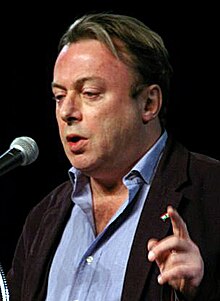
Labels:
C. K. Raju,
Calculus,
catuskoti,
context,
deduction,
Euclid,
History-Centrism,
induction,
Network,
sunyavada,
zeroism
Subscribe to:
Posts (Atom)
