Showing posts with label Hinduism. Show all posts

Sunday, August 16, 2020

#SattvicHamburgers Anyone?

Sattvic Hamburgers?


To make dharma sound 'appealing' and 'contemporary' to westernized audiences and young professionals, a common strategy employed by some Hindu intellectuals is to combine Sanskrit/Indic terms and western categories to produce neologisms.  
 
Examples of oxymorons generated by sandwiching of incompatible Sanskrit/Indic terms and western social/economic/political categories include:

Vedic Liberalism
Dharmic Capitalism
Vedantic Socialism
Hindu Left / Hindu Right
 
Here, an Indic prefix is attached to the western category. Western academia often adds some western prefix to an Indic category:
Neo-Hinduism (Paul Hacker, exposed in 'Indra's Net' by Sri Rajiv Malhotra)
Neo-Vedanta
American Veda (credit Phil Goldberg) 

What is the problem?
The output western re-categorization generated after a deep immersion in 'English Samadhi' is reductionist and harmful. This should not be surprising given that the Sanskrit/Dharmika terms come with a far broader range of meanings and applicability that include the Paramartika while rejecting that which is anrta and adharma. On the other hand, the western component of the newly generated category is usually secular and materialist, and indifferent to Rta and Dharma. Neologisms coined by Abrahamic missionaries are not secular since their goal is to increase the curb-appeal of history-centric theology. They use a dab of dharmika paint to generate religious oxymorons that many gullible Hindus buy into:
 
Vedic Gospel     
Dharmic Fundamentalism
Christunatyam  
Christ Yoga 
Sufi Bhakti 
 
Whether you add poison to Devi's Prasad, or Devi's Prasad to poison, the deeper dharmic meanings get diminished and severely distorted, and ultimately digested into the western (secular or Abrahamic) category. 
 
We must decolonize and work harder to better understand and retain the original terms, and then apply them more effectively in a contemporary context.


References and Further Reading
Books by Rajiv Malhotra
 

Tuesday, February 2, 2016

Decoding the Intellectual Kurukshetra

This post was published in the Indian Cultural Portal. This is an unedited version of the post.
----------------

This blog is about contemporary India, but we start with a bit of European history.

Part-1: 20th Century Europe

Alan Turing 

In 1939, ace computer scientist, mathematician, and cryptanalyst Alan Turning decided to solve the challenging problem of cracking the German Navy version of the Enigma code. Why? In his own words: "because no one else was doing anything about it and I could have it to myself". Thus, the great Alan Turing and his intrepid team at Bletchley Park, through hard work, intelligence, and ingenuity were able to crack the Enigma code, and helped turn the tide of World War 2. The story is well known today. At first, they were resource-strained, and by the time the intercepted messages were decoded and sent up the chain of command, the relevant events had already passed into history. However, thanks to an increase in human and computing resources, and equally importantly, by upgrading their own game, the cryptographers were able to eventually decipher the messages fast enough to reliably predict what would happen in the future. They had turned information on enemy movements into actionable intelligence. Pure gold dust. By closing this gap between interception and decoding, they were able to have a significant impact on the course of the war between the Allies and the Axis powers. So precious was their operation, their work was rated 'Ultra', even above 'Most' secret. Some of Alan Turing's research findings were hidden from public view for 70 years and only published recently. Even beyond WW2, it appears that Enigma machines were sold to 3rd world countries that were unaware that their information could be tracked by the west.

The Nazi analysts themselves believed their Enigma encryption to be fool-proof, and it is acknowledged that in principle, they indeed were. However, overconfidence, and bad operational practices gave away enough clues to Bletchley Park, who were smart enough to take advantage of these lapses. Turing's team was able to make risky predictions that turned out to be right. The allied command subsequently bet the lives of thousands of soldiers on their predictions. Theirs was a solid scientific approach supported by rigorous math and empirical testing, which allowed them to be confident in their predictions. However, if their predictions were wrong, many lives would have been in jeopardy due to faulty intelligence and their work would've been dismissed as pseudo-science. 

What distinguishes science from pseudo-science?

Around 1919, Karl Popper, a western philosopher began to actively ponder this demarcation. He narrowed down the distinction to one of testability. According to Popper, a scientific theory must be able to make somewhat risky predictions about the future. Others would try to falsify this theory, and if this falsification failed, the theory would gain credence. If the events did not happen as predicted, the theory would be weakened, and efforts would be made to either rectify the theory and re-test, or abandon it entirely. 97 years ago, Popper applied his principles to identify at least two theories popular in the west during that time as pseudo-science: the Marxist theory of history, and the Freudian psychoanalysis. Why? These theories simply did not fail! They could explain everything in the past with 100% accuracy, and were irrefutable. First-time viewers, to this day, find this ability to confirm quite irresistible. However, within a few decades of Marx's theory, it failed the risky predictability test not once, but several times. Freudian analysis met the same fate. From this western perspective, it was classic pseudo-science (although, apparently Marx was confident enough to crown himself as 'the Isaac Newton of Social Sciences'). Arguably, Marxist theory or Freudian theory did not become obsolete over time, but were born blind. By brushing away these glaring failures to predict, scientist Karl became prophet Karl. As contemporary events show, 'propheteering' is much more lucrative and unimpeachable (compared to the scientific alternative of forecasting, where a 5% increase in error in predicting product sales may have your client pulling the plug on your project). Well, what on earth has all this to do with India? We discuss this in the next section.

Part-2: 21st Century India

Indology

Welcome to western Indology (India study). The major theoretical foundations of western Indology over the last few decades are, as you may have guessed, Marxist theory of history, and Freudian psychoanalysis! Completely unchallenged, totally unhindered by any need to test predictions, many (but not all, there a few good ones) Indologists have combined to build up an entire body of Indology literature based on these pseudo-sciences. Let us examine the nature of this literature constructed.

The western approach to knowledge-building via math models employs rigorous theorem proving starting from a bunch of 'self-evident' statements called axioms. A 'purva paksha' of the way mathematics historically developed in the west would reveal, at least at a very high level, the contrast between the Euclidean western way of theorem-proving versus the Paninian Indian approach of rule-generation (refer to the talk and work by M. D. Srinivas and others). Infallible western mathematics versus the explicitly fallible Indian Ganita (science of computations) is an interesting topic in its own right, which we will explore in-depth in this space later. The theorem-proving approach allows us to reliably extend existing results, without having to start from scratch each time. By maintaining rigor and by subjecting new ideas to rigorous predictive testing, one can minimize the fallibility of the entire system. Of course, if one of those axioms or proofs were to be found wanting in some future scenario, it can open up a can of worms. 

This incremental approach of knowledge generation used in the hard sciences has been borrowed and applied by the west to social sciences as well, which as we have seen from the time of Prophet Karl, are pseudo-sciences. So we have journal papers quoting and extending the work of previous papers, results building on prior result, producing an incestuous body of Indology writing that can plausibly confirm any and all prior data about India, but is largely useless as far as reliably predicting 'risky' future events. Therefore, not only has this body of work not been useful, but these highly innovative, imaginative and intellectually engaging models have been harmful when used outside academia as a predictor to develop solutions in a real world. If, by chance, a future event does conform to a theory, they can claim credit; if it failed, then of course, the cow and goddess worshiping, "caste" obsessed, curry munching Hindus weren't smart enough to understand Marxism properly. At its core such social sciences are largely a 'Heads I win, Tails you lose' proposition. Thus, when decades of Marxist-inspired methods of planning in post-1947 India inevitably failed to yield results, it was explained away as the "Hindu rate of growth". This also justified the need to continue inflicting Marxism on Indians until they fully understood it, i.e., when enough successive 'Heads' were observed!

Indology Theory versus Hindu Practice

Recently, I visited Columbia University in New York City to add a science conference. The STEM departments in such universities are top-notch. Genuinely curious and good scientists and wonderful human beings. I have learned from them, and my interactions have been beneficial. Only in the last decade did I learn that in these same campuses, in their humanities and social sciences departments, there are other smart professors who are invested in western Indology and Hindu studies. From nine thousand miles away, they were and are doing a whole lot of theoretical model fitting using materialist Marxist and Freudian interpretations of Sanskrit texts that would appear utterly nonsensical to actual practitioners in India. The dharmic content of Hinduism that actually guides its practice is summarily rejected! On the other hand, some western thinkers outside the ivory tower who internalized Hinduism's ideas were able to practically adapt it to solve some of the biggest challenges of the 20th century. For example, the approaches of both Martin Luther King, Jr., and Nelson Mandela, borrowed from the Satyagraha of Gandhi that is fundamentally rooted in Sanathana dharma. The positive and pervasive influence of Swami Vivekananda on western thought is stunning to read, and has never really been acknowledged either. 

The Indology Enigma Machine

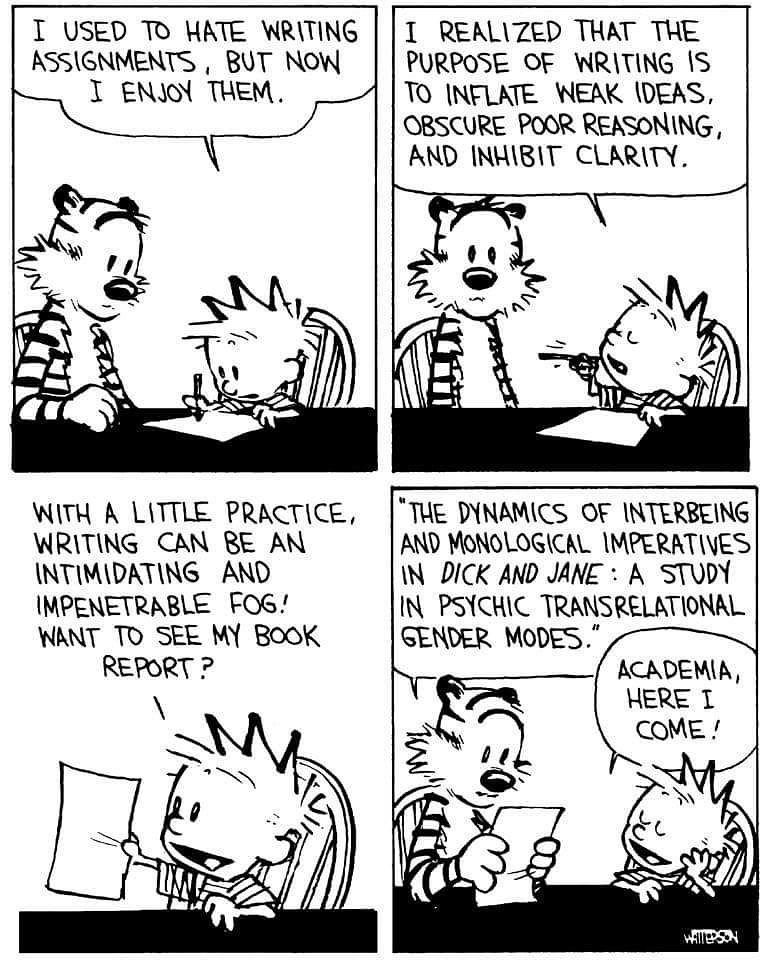
In an earlier era, there were the 'orientalists' from a Europe that had colonized and ruined India, who studied India from the perspective of a superior 'teacher' race. These earlier Indologists have been thoroughly exposed and the new generations of Indologists that are based in the United States are much smarter. They are trained in Sanskrit, have learned from the mistakes of the Orientalists, and have proceeded to cleverly write lengthy papers and analyses using extremely convoluted English (search for example, the pomo generator). Their writings virtually became a code that only their peers, who were part of a mutual back-scratching network, could review, read, understand, and build upon. Alternative new approaches to Hindu studies in the US would be branded as "communal" and "Hindu extremism" by their gatekeepers and shut down. If you, as a graduate scholar, wanted to study Hinduism and get funding, you would have to learn their code language, and thereby also adopt the encoded views about India. Simply put, these Indologists had succeeded in creating their own virtual Enigma machine. This Indology enigma machine is then shipped to third-world India, safe in the knowledge that only the encoders in the US, and their elite disciples in India, would truly know what the messages meant. It became their ultimate inside joke on India. This Indology Enigma in principle is also a fool-proof system like the earlier WW2 model and cracking this code would require sustained, single-minded effort, enormous resources, and a high degree of intelligence to break. They progressed, unhindered for decades, until the breakthrough came in the form of a trained physicist named Rajiv Malhotra.

American Orientalism Decoded

Rajiv Malhotra has lived in the US for more than 40 years and his is another successful Indian immigrant story - he studied physics, but got into IT and Telecom and eventually became the multi-millionaire owner of 20 companies. However, it is what happened afterward that is quite extraordinary. He gave it all up (for one dollar) at the age of 44 to devote his life, full time, to Hindu and Indian studies from an insider perspective. He used his personal funds to set up a research foundation and has over the last few decades, given grants, built up a dedicated home team, and done a deep and thorough study of the Indology landscape from an Indic perspective (and this is really key). While others too have attempted such studies earlier, there is really none else who approached this problem in a single-minded manner, applying scholarly rigor, comprehensive research, and thoroughness. Rajiv Malhotra decided that he would take this up as part of his sva-dharma. He became the perfect storm that was required to crack this Indology Enigma code. Based on more than 20 years of painstaking research, and at a high personal cost, Rajiv Malhotra has authored five epic books on related topics, and we will briefly examine a specific trilogy among them, noting that the very first book, 'Invading the Sacred' demolishes the Freudian psychoanalysis applied to Hindu studies in America. 

The first book in the three we examine here is 'Breaking India', which analyzed the prior Indologists, mostly from Europe, whose theories from the 19th century have devastated Indian politics and sections of society (including in my own home state) for more than a century now. Thus, the initial decoding of Indology by Rajiv ji, while being amazing and successful, is associated with a large time lag between when these virulent messages were encoded and when they were fully decoded. However, his next book 'Indra's Net' that focused on newer but equally diabolical Indology theories reduced this time lag. Here, he was able to expertly decipher the more recent discourse around the spurious idea of 'Neo-Hinduism' being propagated in India over the last few decades. Finally, his latest book, 'The Battle For Sanskrit' was released in India a couple of weeks ago. While this book is yet to release in the US, I have studied several video overviews of its content to realize that it has exposed the ugly face of an  'American Orientalism', a new form of orientalism. 

It is clear that today, Rajiv Malhotra's systematic approach has been able to decipher the output of American Orientalism as it is happening in the US right now. In this desperate intellectual and civilizational Kurukshetra, for the first time ever, practicing Hindus will have actionable intelligence that will enable them to proactively mount a defense before these destructive theories fully percolate into the Indian discourse that is controlled by sepoys - the paid native intellectual gunmen of these western masters.

A new generation of dedicated intellectual Kshatriyas are needed to carry this work forward. Who will join this Battle for our Sanskriti?

References

beingdifferentbook.com
thebattleforsanskrit.com

Comic

Hobbes is nonplussed. Calvin needs Rajiv ji's help!


Sunday, January 25, 2015

Dharmic Clock Running Out

A quick back-of-the-envelope 5-minute 'ball-park' estimate of the 'market share' of dharmic people in undivided India.

Please feel free to post corrections if the numbers are way off, so that readers may benefit.

The following three rows display a recent population estimate by country (in millions), and the approximate percentage of Hindus (dharmics) in that national population.


India: 1230M (78.5%)
Pakistan: 192M (1.85%)
Bangladesh: 158M (8%)

total share of dharmics
= (1230*0.785+192*0.0185+158*0.08)/(1230+192+158)
~ 62%

I recall reading somewhere that the percentage of Hindus in
1947 undivided India was 66% (link needed). If true, this means, from 947CE to 1947, dharmic share dropped from 100% to 66%. This gives us a decline rate of  34/1000, or about 3.4 percentage points every hundred years, on average. During this period, the Abrahamic invaders of India perpetrated the biggest holocaust in the history of mankind, dwarfing both the massive genocide of native Americans by Euro-Christian invaders, and the mass-murder of millions of Jews during WW2 by the Nazis. Most native populations around the world crumbled under such continuous onslaught, but dharma stood its ground.

Yet, post independence, in just 67 yrs since 1947, the dharmic share appears to have dropped 4 percentage points. This despite enjoying more than 3/4 majority in India and having the freedom to chart their own prosperous future, and the luxury of having no organized Abrahamic genocidal opposition to fight. Today's Hindus, in far, far more benign times, appear to be losing demographic share at roughly twice the rate at which their heroic ancestors lost ground in the previous thousand years. Instead of the decline being arrested and reversed, it appears to have accelerated. Why? There are likely to be many reasons, both internal and external. Let's look at one internal picture.

Lack of dharmic grounding?
In this era when Tamas rules Hindu minds, when educated Indians recklessly brand and market themselves using "center right wing" or "center left wing" or "regional" or "world citizen" or some other gibberish label, and some its intellectuals cumulatively devote precious man-months to intellectual gymnastic dogfights over Vimanas, this should not come as a surprise. We see respected thinkers continue to fund and celebrate the suicidal process of outsourcing the R&D of key strategic knowledge areas (which should've been their core dharma) to Hinduphobic academics in India and the west, and mock native attempts. This is not merely a sign of intellectual bankruptcy, but utter adhyatmic bankruptcy. IQ, and not dharmic quotient is revered today, and consequently, almost all of India's thought leaders have lost their dharmic compass, and it does not seem to worry them in the least.  

If Moron Smriti continues to reign, then simple math sends a message: for the first time in many thousand years, dharma will no longer be the majority in a little more than 200 years from now in its own sacred geography. That's just a few rebirths away.

Monday, August 25, 2014

Murugan, Pillayaar, and Anjaneya as Hindu Knowledge Models

An inordinate number of Indians born in dharmic families who are understanding their dharma and sharing experiences of this self-study journey online over the last couple of decades belong to STEM disciplines. This is no coincidence. Science, technology, and the scientific approach (via first person empiricism, for example) is one of the useful means in this rediscovery. As we progress along this path, we note the beneficial and positive changes it brings within us, our family, and our community. Our body and mind becomes a laboratory in this fascinating journey. Non-verified theorizing using pulled-out-of-thin-air ideas, text-parsing-regurgitating, or using mental gymnastics to come up with new formulas, however brilliant they may seem, falls short in the end. The process cannot be reduced to some intellectual steeple chase. From a personal point of view, it is a scientific journey of inner-discovery.

So, how have we gone about acquiring this dharmic fruit of knowledge?

There are two ways. Many Hindus (self included) have taken the scenic route. You leave dharmic India to travel round the world (mentally or physically) learning about everything else, before realizing, after a decade or three, that you have to do a full circle and return home to India and start from near-scratch to seek the questions that really matter and the answers that are really honest. This is the Murugan (Kartikeya) model. It is no coincidence that I visit Sri Subramaniya Swami at Pazhani every year in this voyage of inner-discovery. A lucky few have adopted the Pillayaar (Ganapathi) model. They already realize (not merely believe) that this 'Gyana Pazham' is right there in India, and save themselves a lot of time and hassle. Muruganists can be grumpy about all the hard yards they've put in and retreat into their shell, but their encounters with the non-dharmic world is not a wasted effort. Some of the Pillayaarists, because of their kind disposition or naivete, tend to be less aware of the subtle nature, ways and means employed by hostile non-dharmic forces, and despite their naturally deep understanding of Hinduism, become likely candidates for 'digestion' into secular/Abrahamic ideologies. Hence, rather than debate endlessly on "which model is better", we can see this as a re-enactment of 'Thiruvilayadal', the divine play of Shiva to bring his children who have adopted different paths to realize the underlying integral unity that binds us, and to complement one another to achieve balance. Doing so allows us to combine the strong points of each model to produce the best response to the challenges we face today.

But is this enough? Most Indians (of either model) are in doubt about their own strengths, while being excellently up-to-date as far as knowing their negatives and limitations. 'What Indians cannot do', 'top 1008 defects in Hindus', 'why we are corrupt', etc. is what we are hearing every day. It has reached such a stage where this stuff is becoming a self-fulfilling prophecy, and we have forgotten all that is strong and positive about dharmics that is critical to turning things around. India today is like the Anjaneya who sat quietly when the rest of his team was volunteering to take the giant leap across the ocean. Yet, Hanuman is there to remind us that just like he forgot his own strength for long but recalled it at the right time, and was there at the right place to be able to take advantage of it, we too are sure to discover our inner Anjaneya if we do our dharma without expectations, and show up at the table. And it doesn't matter which dharmic path we took to show up there.

Clearly, our wise ancestors have left us enough clues on how to go about things.

Thursday, August 14, 2014

Let Us Not be Art Sepoys

A bizarre request came the other day. We'd like your kid to be part of the festivities at some kind of Teen USA type beauty pageant. Specifically, an opportunity to showcase classical Indian dance forms like Bharatanatyam, Odissi, etc. How long was this performance? 30 seconds. The bigger kids would be putting on a few seconds of show to lend 'color'. The theme: atrocity art. You know depict how the girls of India have overcome the oppression of patriarchy, dowry, female infanticide, rape, and all the other good stuff that is used to define India and Hinduism.

I have to drive my kid more than 60 miles each way to be part a 30-sec exotica side-show in some teenage beauty pageant with the express purpose of volunteering my heritage to mock my heritage in front of a ignorant TV audience? I was in two minds. Like Viv Richards undecided whether to hit the ball for a four or six. Dear organizers, idhu konjam over.

Still, I would be ready to do the needful, provided the following things are part of the festivities:
- dancers from the middle east depict how Yazidi girls, Kurds, etc. are overcoming the slaughter and oppression of fundamentalist Islam
- Ballet from Europe will depict how Roma girls,  African girls, and Jewish girls have overcome centuries of racism and colonialism that continue to this day, the two world wars that they inflicted on the rest of the world, the communism and the churchianity that continues to extinguish the aspirations of millions of girls all over the world, ..
- Dances from China will depict how their girls are fighting for the human rights that have been trampled there for decades, and the millions that their secularism has killed
- Dances from North America will depict how the few remaining native American girls from a population that was once as big as Europe's are fighting against all odds, and how little kids continue to be molested in some of their churches, girls being shot in schools, girls being abused at a very high per-capita rate, girls overcoming racism, girls not joining science courses in college, girls on drugs, girls with mental issues, girls bullying in schools, etc. are being overcome ...
- South America will similarly show how their natives have overcome the torture and massacre of tyrants from European invaders to corrupt leftists to drug-lords
- Australia will show how the few remaining Aborigine girls who have escaped extermination are coping ..
- dances from "South Asia" will show how Hindu girls in Pakistan and Bangladesh have been systematically annihilated solely because of their faith
....

Let us see all those dances too. Let atrocity art be equal and proportional opportunity. If India gets 30 seconds to "showcase" itself, then surely these other examples should be given at least 300 seconds each to depict how they have covered themselves with glory. Noting that dharmic India has on its own, done more self-reflection, self-criticism, and self-reform than the rest of these ideologies and cultures put together despite centuries of brutal foreign occupation that introduced a lot of the problems. Let us showcase that fact too.

Or, let us use the occasion to spread a positive message of hope amongst our girls, and proportionally show each of the cultures celebrating the best representation and accorded status to the women and the girl child in their heritage. You will find that dharmic India will need to be given 3000 seconds if the others get 30 seconds.


Of course, one need not go far from India to find folks ready to fight stupidity with stupidity. Many dysfunctional male and female artists in India are misusing their dharmic art training to mock Hinduism and dharmic India and make a quick buck in front of a cheering western universalist audience - betraying the very open-minded culture and heritage that bestowed on them their skills and fame without fear or favor in the first place. 'Being clueless' has become a marketable talent in secular India.

This August 15, let us pledge to free ourselves of mental colonization. For starters, we must not allow our children to become tomorrow's art sepoys.

जननी जन्मभूमिश्च स्वर्गादपि गरीयसी


Tuesday, August 12, 2014

The Essential Dharmic - Part 1: Necessary Conditions

This blog is as always, a work in progress, and will be revisited in the future as the ideas further crystallize. This post is introductory and leaves a few statements undefended and unexplained. This will be revisited in subsequent posts rather than make this introduction a very long one.

Background, Motivation, Preliminaries
a) This brief note was triggered by this tweet by the dedicated blogger @realitycheckind whose analysis and insightful commentary on the Indian education system, among other important topics, has helped shape a lot of minds.


b) This note uses ideas from a prior work that introduced a new modeling interpretation of History-Centrism, a concept introduced by Rajiv Malhotra in his book 'Being Different' (BD). The aim is to reintroduce the problem of 'who is Hindu' as the task of determining necessary and sufficient conditions (N/S), if any to 'be Hindu'. To answer this question, I borrow heavily from Rajiv Malhotra's new book 'Indra's Net' (IN). These posts are a first attempt to look at the ideas introduced in these books from a math-logical angle and see if any novel and useful insight reveals itself.

In the introductory blogs in this space, we saw how dharmic thought systems (DTS) were non-trivially different from history-centric (HC) ones, and the N/S conditions that used to delineate HC, and deemed "secular" and "universal" in nature, are in fact inadequate - they are neither sufficient nor necessary to distill the essentials of a dharmic. We explore this space further using ideas from 'Indra's Net'.

c) Most, if not all, of those who are trying to rediscover their dharma in their own way, belong to science, engineering, and math-based disciplines. Hopefully the language employed here is not so unfamiliar as to make it entirely unreadable.

d) Rather than just examine the Hindu issue, we follow Rajiv Malhotra and address the broader and (more powerful) general case of 'dharmic', which then allows us to treat 'Hindu' as a special/specific instance within this dharmic family.

e) These posts are less about conclusive and definitive answers, and more about getting dharmics to ask rigorous questions and initiate a debate: Who are we?
To begin to know what makes us who "we are",  a good place to start is knowing 'who we are not', so let's begin there.

Questions
First, I agree with the depicted tweet.
Reason: Abrahamics are an instance of HC religious membership, and it has been shown before that N/S conditions that define HC do not work for DTS (including Hindu Sampradayas, Jains, Buddhists, and Sikhs).

This leads us to three questions:
a) Are there essential features that allow a person to even qualify as a potential dharmic, and then
b) go a step even further and ask if we can stipulate conditions that are sufficient to characterize/define a dharmic?
c) What are the benefits and risks of having or not having such 'essentials'?

Separation Rule: Machine Learning Analogy
We will address these three question over the next few blogs, starting with (a) today. In particular, we are looking for a separation rule that allows us to achieve two objectives:
a) The separation rule should bring out certain salient properties of dharma thought systems, and be commonly satisfied by all instances within the system
b) These salient features should not be present in non-dharmic systems.

In other words, identify what is special and common to the dharmic cluster, but is also anathema to non-dharmic systems. This problem can be illustrated via this classical machine-learning picture that classifies incoming data as 'red' or 'blue'.
(picture source: http://glowingpython.blogspot.com/2011_10_01_archive.html)
Imagine the blue dots to be instances of a dharmic system such as Advaita, Buddhism, Jaina, etc., and the red dots to signify instances of non-dharmic systems (including history-centric faiths like Sunni, Mormonism, Protestantism, and new-age systems like scientology, random hippie movements, tree-huggers, cargo cults, etc.). The dotted line represents a machine-learning rule such that any current or future new religion that lies to the left of the line (e.g. answer computes a "YES" to the rule) is classified as potentially dharmic, and instances that fall to the right (e.g. answer computes a "NO" to the rule) is classified as surely non-dharmic. Also the proximity of the observed data point to the line may indicate the degree of violation or satisfaction. For example, an exceedingly adharmic system that permits genocide and slavery of innocents would be "red" and far away from the dotted line while some pagan faiths may be merely borderline red. Therefore, such a separation rule would also prescribe an 'escape route' for a non-dharmic system that allows it to eventually turn dharmic by reforming itself by becoming a "YES" instance. Clearly the presence or absence of such a separation rule has important practical implications in this world.

This allows us to rephrase our questions by asking:
- does there exist a separation rule that allows us to classify an input system as dharmic or not dharmic.
- Is this rule necessary, sufficient, both, or neither?

Rajiv Malhotra answers the first question in the affirmative and specifies an instance of a separation rule in his recent works (BD, IN) by a detailed examination of a variety of historical data and other sources of information.  Whether this rule is necessary and/or sufficient needs to be carefully analyzed.


The Essential Dharmic
There are three possibilities regarding the essentials in (a):
Possibility 1. We can reliably write down necessary conditions to even qualify as dharmic. These conditions may or may not be sufficient.

Possibility 2. We can reliably write down sufficient conditions to even qualify a dharmic. These conditions may or may not be necessary.

Possibility 3. No necessary or sufficient conditions can be written down that qualify or disqualify a person from being dharmic.

Response:
1. There are necessary conditions to even qualify as a dharmic. Equivalently, these represent sufficient conditions to disqualify a person from being dharmic
In other words, before we even try to essentialize Hinduism or other members of the dharmic family, we can and must be at least be able to tell what it is not. These conditions include:
- rejection of Karma
- rejection of Punar Janm

A person who rejects Karma or Punar Janm cannot be accepted as dharmic. A rejection of any one of these dharmic beliefs is sufficient grounds for disqualification, and an acceptance indicates a basic and necessary qualification (i.e., in the sense that it does not guarantee anything and in itself is not sufficient to pass the exam, but at least allows you to take the exam). Indra's Net makes innovative use of the terms Nastika, and Astika to distinguish between those who reject, or accept these two truth claims, respectively. HC members, in particular, are disqualified, since Karma or reincarnation are irreconcilable with the N&S conditions (why?) that define their own membership. The reasons for including these two specific truth claims are quite deep and worth studying. These beliefs are shared by all members of the dharmic family, but are not (in fact, cannot be) shared by history-centric systems at least, and some other new-age cults and other historic faiths. Detailed reasons can be obtained by reading the works of Rajiv Malhotra, but we will try to present additional intuition in the next post using the models developed in this space.

 
What is also important is that this separation rule is derived from dharma and not some secular-western legalese, and are also significantly different from HC/Abrahamic type membership conditions. To see the intuition behind this, let's look at two tweets together:


Again, I would agree with statements in both tweets if it means that essential features of DTS (if any) are not same as that for HC (e.g. Abrahamic). However, given the 140-char limit of twitter, this is a bit terse and is more focused on the legal point of view. I would disagree if the intent of these tweets was 'anything goes for Hinduism'. There has to be certain necessary conditions of elimination that narrow the scope and state a basic qualification for a person to possibly be dharmic, and there can be a debate on what these necessary conditions are. The conditions stated above are based on my understanding of the discussion in 'Indra's Net'. For example:
- a person who believes in any of the truth claims in the Nicene creed would not be able to meet these conditions and thus be disqualified as Nastika from a dharmic perspective.
- A secular person or an atheist who rejects Karma or say, an Islamist or a pagan who rejects reincarnation would be disqualified and deemed a Nastika from a dharmic perspective.
- It follows that a person who is not rejected is an Astika. However, whether these conditions are also sufficient to fully and definitively answer 'who is a dharmic' i.e., is an astika = a dharmic? is a discussion for another day.
- It is also interesting to note that the Astika/Nastika dichotomy and the necessary conditions employed to come up with this classification does not depend on simplistic belief or non-belief in some dualistic 'God'. Evidently, Nastika does not equal "atheist" and Astika does not equal to 'believing in God'. This is not surprising once we see that 'atheism' and 'God' are constructs that came out of history-centric systems that has dominated the airwaves in the west and middle east for many centuries now.

A key differentiation is that HC membership rules (e.g. Nicene Creed) imply exclusivity and introduce a host of duality-ridden binary partitions like us-them, before/after, moral/immoral, atheist/theist, Satan/God, etc. that are of limited use to dharmics. Although these partitions are simple and easy to grasp, separation rules derived from HC are not universally applicable (including in legal courts), and certainly cannot be employed to narrow the scope of who dharmics are or are not. We will conclude part-1 with a case study to illustrate this point.

Case Study: The SGPC in 1925 came up with a definition of 'Sikh'. Here is Arun Shourie talking during the book release of Indra's Net:

" ...People were asked what is your religion. So, 95% of them said we are Shinto, 76% of them said we are Buddhists. It couldn't be: because it was no different for them. It was completely Judaic, Christian, Islamic notion that you can either belong to this or to that. We are Hindus, many of the people, persons like me, all my reading is Buddhist, many of my practices would be from teaching of the Buddha but nobody would say that I am less of a Hindu or more of a Buddhist or vice versa and actually this notion was fomented in India and the first time this happened is in the Shiromani Gurudwara Prabandhak Committee Act. In that Act, ‘Who is a Sikh’ is defined. ‘Who is a Sikh’ – He who believes in the Granth Saheb, He who believes in the Ten Gurus. Most of us could be Sikhs from that point of view, therefore a new clause was added "..and who does not belong to any other religion". You and I may think it is just an administrative thing, but that seed is sown in 1925 and you see it in the agitations of Bhindranwale and others much later... as to what happens when these seeds come into being. "

We can see that the SGPC came up with two conditions
i) the first is clearly a necessary condition: belief in Granth Saheb and Ten Gurus. Seems pretty reasonable and natural. I, like most dharmics, deeply believe in both, and I personally agree that this is an important requirement.

ii) a second necessary condition that in combination with the definition-type ruling on "who is a Sikh", makes their statement taken in totality behave like a sufficient condition for defining a Sikh, and weeding out non-Sikhs:
A Sikh is essentially one who believes in the truth claims of the Granth Saheb and the Ten Gurus, and does not simultaneously belong to any other religion.

The latter clause is a HC-like membership rule that forbids any dual-citizenship, and is likely to be a bitter pill for dharmics to swallow and I personally reject it. Why? (i) in itself is sufficient to reject all HC members (e.g all Abrahamics) who cannot simultaneously satisfy HC's N&S conditions that irreconcilably contradict (i), and have to pick one faith over the other. However, (i) is not sufficient as far as excluding members within the dharmic family who do not explicitly label themselves Sikh. Therefore, the only role of (ii) appears to be to introduce an exclusivity clause to reject those who call themselves Hindus, Buddhists, Jains, etc. Rajiv Malhotra's separation rule does not repeat this sectarian mistake, and returns the focus rightly to the biggest picture there is, the Kurukshetra where dharma battles adharma. This decision may well turn out to be one of the great turning points of the Kurukshetra. It is possibly a side-effect of the mistake by SGPC that Wikipedia today describes Sikhism as 'monotheist' - tragic fiction. Depending on the context and situation, most dharmics today operate like a Hindu, Sikh, Buddhist, or Jain, or one or more combinations. Clearly this kind of exclusivity based essentializing is dangerous, misinformed, and adharmic because of the harmful tensions it creates within the society. There may be disagreements within the dharmic family on the nature of the ultimate reality (e.g. Shunya or Brahman) that causes one to choose a Buddhist or an Advaitin perspective, but there was and is unanimous agreement on the primacy of (saamanya) dharma, and upholding its integral unity (ref: BD, IN).

This sets up the ground rules for coming up with such N/S conditions or rejecting such conditions. Any alternative candidate for the separation rule that is put forward to improve upon the necessary conditions for dharmics stated here has to be equally, or more sustainable and must transparently and unambiguously support dharma. Simply put, a viable alternative can only arise from a dharmic basis. Furthermore, dharma, unlike history-centric constructs, is truly universal.

Take Aways
The key takeaways of Part-1 are:
- "anything goes" and some (random) "way of life" answers to who is dharmic is non-rigorous, open to adharmic manipulation, random claims and definitions of Hindu-ness that are neither necessary or sufficient, and is especially unacceptable in a world where the dharmic market-share of demographics, geography, and global influence is shrinking at an alarming rate every year. We can and must do better.

- the presence of a separation rule that narrows down the scope of who is and is not dharmic has important practical implications and value. However, a bad choice of a separate rule brings with it its own negative side effects and risk

- necessary and/or sufficient conditions derived from History-centric theology or secular concepts are unlikely to work for dharmic classification/qualification, are not universal, and hence rejected.

- necessary conditions rooted in dharma are required to narrow the scope on who qualifies to be dharmic, and thus also prescribe sufficient grounds for disqualification.

- Necessary conditions based on the ideas from the book 'Indra's Net' are stated here.

- Note that this response rejects Possibility #3 by clearly stating that there are indeed certain essentials having a dharmic basis, that are at least necessary to be Hindu, Buddhist, Sikh, or Jain (or dharmic, in general). However, are these conditions sufficient? What is so special about Karma and Reincarnation? Does having any separation rule invariably come with the burden of risk? We will discuss this in a later post.


Acknowledgements:
thanks to @sighbaboo and @DigestionResist for reviewing an early draft and sending me feedback despite their busy schedules. Errors and shortcomings in this post are entirely mine and bugs will be fixed periodically blogs as more data becomes available and understanding improves.