Saturday, October 25, 2025

I won but did Dharma win?

Whether it is an online debate, a major decision, a fight, an exam, a project, or a daily office task, these are four simple dharmic criteria to claim 'success'. These are both necessary and sufficient conditions:

1. you win and dharma won =>    you won
2. you lose and dharma lost => you lost
3. you win and dharma lost => you lost big
4. you lost and dharma won => you won big. #3 and #4 are the important ones.
This is just Dharma saying: a lack of preparation on your behalf does not constitute an emergency on my behalf. A win for me doesn't automatically mean that it is also a win for dharma, just because I am a Hindu/Buddhist/Sikh/Jain and the opponent is some leftist, atheist, or racist, or from a different country. These rules are universally applicable and independent of race, religion, nationality, and gender, etc.

In the past when different dharma sampradayas debated in accordance with the rules of dharma, accepting personal defeat meant the dharma won. The win or loss for an individual or a group eventually pales into insignificance when dharma itself loses.

A loss for me (or unsure if I won or lost) in the pursuit of dhama that results in a win for dharma is a huge win, and should be cherished. That is the toughest test for us all. After all, Bharata is the land of Abhimanyu and his descendants. It is not always clear if dharma won or not in today's world with its many shades of grey in this Kaliyuga, the era of uncertainty. Yes, almost all of us are guilty of violating these rules at some point in time, either willfully or out of ignorance. However, if we keep these rules in mind in shaping our intent, we are less likely to make the mistake of hardwiring the dogmatic belief that our minuscule and transient personal success or failure implies dharma's success of failure.


Sunday, February 18, 2024

A nonlinear rise in Team India's fortunes is inevitable #Ganita

 Three events reported in a day:


https://twitter.com/niravstoons/status/1759205630274089143 


BAI Media (@BAI_Media) / X (twitter.com)


https://twitter.com/AdvAshutoshBJP/status/1759215880679141779  


A 9-year old boy chess prodigy, a 17-year old girl's nerveless display to clinch Badminton gold for India to win the Asian team championship, a 22-year old cricketer's effortless double century to swing a cricket test and series in India's favor. All in a day's news. Such stories were also celebrated in the past but infrequently and were treated as big surprises, but three stories reported in a day is no longer unexpected. The potential size of India's sports base is such that successful outcomes become inevitable if the number of opportunities to convert to a podium finish is increased even by a small percentage.  Even though a specific outcome depends on individual karma and their sadhana and is not deterministic, the simple Ganita of outcomes as a group is that:

Given 'n' opportunities and a probability 'p' of success per opportunity, the expected number of successful outcomes = np

For a nation, n represents the size of its sporting base: the number of individuals with a liking for the outdoors, are athletically gifted AND their family is willing to consider a brief or long career in or through sport.  On the other hand, p captures the complex impact of identifying such talent and the dharma of their selection criteria, diet, training, exposure, and ultimately, their conscious mental ability in the heat of battle.

Until a decade ago, both opportunities (n) and the chance of success (p) were low. The current Indian state is that both n and p are low in comparison to natural sporting nations like Australia. Every small improvement in India's health and fitness, sports and education to reward, encourage, and nurture sporting talent, will simultaneously raise n and p and yield a nonlinear and sustainable increase in the number of such success stories in Indian sport. 

For example, a modest 10% improvement in n and p, improves the expected number of successes to (1.1n * 1.1p) = 1.21 (np), i.e., a 20% increase in the expected number of successes.


Friday, February 9, 2024

The #Ganita of Sandwich Slicing: Are Triangles better than Squares?


Question- How do you like your sandwiches sliced: Triangular or Square?


Triangle

Picture credit: (VIDEO) Tricolour Triangle Tea Sandwiches (theinspirationalnook.com)


Square


(Picture credit: Ribbon Sandwiches (Rainbow Sandwiches) - The Flavor Bender)


To answer this from a Ganita perspective, let's apply some high-school Kshetraganita (the original geometry):

Consider a square bread slice of side length '2a' (area 4a²). Slice it into 4 pieces of equal area a² each in two different ways:

1. 4 squares of side length 'a':

area of each square = a², perimeter of each square = 4a = 2 × 2a, i.e, twice the length of the original side.


2. 4 right-angled triangles:

Confirm the area of each triangle (crust-edge as base) = 1base × height = 12 × 2a × a =  a²

Next, apply the 'square on the diagonal' result from the Sulbasutras to calculate the length of the diagonal on the original square:

(4a^2 + 4a^2) = 2√2 a.
The sides of each triangle are half as long as this diagonal.

Alternatively, using the 'circlometry' of Aryabhata (the original trigonometry), we let φ = the corner angles of the 4 right angled-triangles = 45°.

The original jya of Aryabhata calculates length and not a ratio like sine (it is of the form "R sine φ", where R = radius of a circle), we can obtain the length of the side = 2a×sin(φ) = √2a 

 From this, we get the triangle's perimeter

= base + 2 sides 

= 2a (1 + 2) ~ 2.414 times the length of the original side


The perimeter of the triangular slice is about 21% longer than that of the square slice of the same area. What sorcery is this :)

Since the area of the sandwich filling that is visible to the consumer = perimeter × thickness of the filling,  triangular slices may have better curb appeal as they show off the filling 21% better than square slicing, which is itself twice as good as not slicing at all. 

Each square slice has one full crusty corner, and a crust length of 2a. The triangle is tied on crust length but has two 'half-corners'. So if your kid is fussy about corners, triangles may prevent left-overs in the lunch box. If they don't like crust-edges and the fillings are not exciting, then you may need to go back to the square one.


Wednesday, December 6, 2023

#NonBinary is an oxymoron, and the Moral Relativism of #Wokism

"Non-binary" is itself a binary classification, and asserts a binary belief.

The moment you use a label, a nama-rupa- the very idea of using a label, is to introduce a binary split within entities that were previously grouped together, First, create a differentiation based on certain attributes and then use a label to mentally reinforce this partition.


Some related tweets on the skewering of logic.

Shivoham on X: "Can the gender fluid mechanics profs of Supreme court of india even define 'same sex' precisely without tying themselves up into a logical pretzel?" / X (twitter.com)

in this context:

Shivoham on X: "https://t.co/OQfCDa1AQa supreme court jesters must first define "same sex" precisely. let the fun begin." / X (twitter.com)


And talking of 'context', Ivy league woke humanities faculty may have taken a digested and utterly flawed version of Dharma ethics (that is always governed by Satya without ambiguity) and turned it into the antifragile ethics of moral relativism, in order to justify "friendly" calls for genocide.

"dharmic thought offers both universal and contextual poles – not just the latter, as that would be tantamount to moral relativism." - Rajiv Malhotra. Being Different: An Indian Challenge to Western Universalism (2011).

(2) Bill Ackman on X: "The presidents of @Harvard, @MIT, and @Penn were all asked the following question under oath at today’s congressional hearing on antisemitism: Does calling for the genocide of Jews violate [your university’s] code of conduct or rules regarding bullying or harassment? The… https://t.co/eVlPCHMcVZ" / X (twitter.com) 


On the lighter side, gender bias is not a bug but a feature of English:

Shivoham on X: "https://t.co/gTyZDA8I6c caption exposes the built-in gender bias in English :)" / X (twitter.com)


Wokes oppose guns in the US that murder school kids but are comfortable with killing them in the womb to suit a lifestyle.

"Context".


A more useful and deeper multi-valued logic exists in the dharma systems of Bharata that go beyond the Aristotelian logic of the excluded middle, including the Buddhist Catuskoti and Jaina Syadavada. The solution to this mess also is in the harmony of dharma and not the divisiveness and hatred sown by the binary pair of Wokism and Abrahamic Fundamentalism.

Shivoham on X: "https://t.co/6JWasksfUU #MadhuraBhakti continue to be dumbfounded by dharma's ability to effortlessly transcend gender and other dualities and unite with the divine. Beautiful post to read and share with family." / X (twitter.com)

Saturday, June 4, 2022

An Ode to the Hindoo-Pagan

I was the Vedic circle and square, Desi and dharmically fluid until an Indic druid with a decolonial spray gun painted me polytheist-pagan (a polygon?) and now I'm an Indo-European doctrinaire 


- dedicated to useful Hindoo idiots who provide a back-door entry to the fictitious Aryan Invasion Theory.


The Sheldon Pollock Syndrome: The Over-informed Non-practitioner

A corollary to the saying “Avoid being over opinionated and under informed”
is "Avoid being the over-informed non-practitioner".

Remembering this corollary helps avoid the pitfall of turning into a top-down thinker, i.e., a person who theorizes others practices through every form of second-hand learning: reading business articles, media reports, video demos, academic dissertations, management reviews, investment hype, book parsing. sound-bites from other top-down thinkers, and soon convinces himself that he's a "strategic" expert who sees what mere mortals cannot, and projects a sophisticated image.  The end result is a delusion of grandeur where one's ego and false pride in 'knowing' defeats common sense.

The "spend ten thousand hours to master a subject" statement is valid only if you are actually immersed in learning by doing, first hand, else it is an exercise in futility and a whole lot of wasted time.  In-the-trenches work is always preferable to head-in-the-cloud intellectualism for the former is much more aligned with reality and Satya. The latter is fragile as it is anchored not in reality but an imagined reality. Success belongs to those who work twice as hard behind the scenes.

This phenomenon of the over-informed non-practitioner can be termed the Sheldon Pollock Syndrome, after the western Indologist Sheldon Pollock who "studied" Hinduism, the quintessential system of lived traditions from every external angle for 30 years without actually practicing any of it. As a result of this intellectual text parsing, every bit of wisdom and sensible thought in the Ramayana or Sanskrit kavya completely bypassed him, leading him to bizarre conclusions and comical "findings" that find favor among idiots and conspiracy theorists.

Whether one wants to get into AI or Hinduism/Dharma or Martial Arts, the best way is to start with actually practicing, first-hand, through Prayoga. Doing is both knowing and learning:

 Shivoham on Twitter: "For example, sulba constructions and demonstrations are 'self-verifying'. No separate theorem is necessary. Hindu idea of prayoga: Doing is both learning and knowing." / Twitter


Sunday, May 2, 2021

Voting during Covid-era Elections: A Quest for Predictability

There are already many expert articles explaining why Kerala re-elected a corrupt communist leader with a history of violence, how TN deliberately chose a party that ranks among the worst in the world in terms of security of women, corruption and public decency; why Bengal went back to a violent party that has failed its people dismally.

Below is my brief view as a Ganita professional currently studying fragility from an Indic and dharmic perspective. 

The recent Indian State election results (and the POTUS election) can be primarily explained as a public response to uncertain times. Am I covid positive? what will happen if I am? How reliable are the vaccines? Will they make a bad situation worse?

In these highly uncertain chaotic times, regaining, even craving for, a measure of certainty and control in every aspect of life is what we seek. It's a modern human tendency. This quest for more certainty among the public manifests in different ways. People will vote for a party that is (or projects itself as) one single entity with one strong local leader and offers more predictability.

Trump lost his re-election because his handling of the Corona pandemic lacked clarity and pushed the US into greater uncertainty. This was apparent in July 2020 itself. 

Indian public in these times of lockdowns and broken economies too want a party that offers more certainty and predictability. Of course, there are many other factors that domain experts have pointed out. But a state party that appears as one edifice, one clear leader, and projects a degree of certainty that has gone missing in public lives stands to gain from nervous fence sitters in these times.

TN prefers a known gasbag to a bunch of leaky Oxygen cylinders. The winning leader with his party firmly behind him was preferred to the ruling party that was depicted as a coalition of coalitions riddled with in-fighting and tussles, however good their performance was during these troubled times. Of course, when people elect confident gas bags, they will get predictably bad governance they voted for, which during these covid years will eventually result in more uncertain futures for the people, not less.

The lesson for the next set of Covid-era elections is clear then: The party that brings more certainty into people's lives stands a good chance of winning. A party that brings more certainty along with dharma will also benefit the Rashtra and its people.


Saturday, September 19, 2020

Interesting word origins of some narcotic drugs

Mostly Indic/dharmika non-fiction with bits of good quality western fiction writing thrown in is an antifragile allocation of scarce reading time. The former eliminates your downside, and sometimes, the latter can pleasantly surprise you. Lee Child is famous for his Jack Reacher series:"A detective series where the detective commits more homicides than he solves". His books have some interesting turn of phrase that makes you think long after you've forgotten the story. Given the current 'drug busts' going on in India and the two rival camps that are slugging it out, here are some interesting word origins summarized from Lee Child's short nonfiction book 'The Hero' (my annotations are in parentheses):

Opium Poppy: western scientific name: Papaver Somniferum (the poppy that carries you to sleep). 

(Modern taxonomy credited to Carl Linnaeus may have been inspired by the traditional Indian Sanskrit approach to naming, and the latter is probably better, as noted in Rajiv Malhotra's book 'Being Different':

"..According to the assessment of William Jones, published in 1795, this taxonomy was more advanced than the standard Latin-based ones used by Western botanists. Jones writes: 'I am very solicitous to give Indian plants their true Indian appellations, because I am fully persuaded that Linnaeus himself would have adopted them had he known the learned and ancient language of this country …'")

German Pharmacist Friedrich Serturner refined Opium after several years of tinkering to produce the most potent chemical painkiller known so far.

Morphine: named after the Greek God of dreams.

Rival: from the Latin word Rivalis, one who competes over a river.

Barbarian: Greek word for those 'savages' who were unable to speak Greek. "To the Greeks, all that such people could manage was baa-baa-baa, like sheep. Hence ba-ba-rian." -Lee Child.

Addict: from the Latin word Addictus, a word for a person who is forced to become the slave of his creditor (like the bonded laborers of Zamindars).

A few decades after Morphine's invention, another German chemist, Felix Hoffman was tinkering with Morphine to synthesize Codeine, a milder and less addictive chemical for kids. After many experiments, he ended up creating something that was twice as potent and delivered twice the high of Opium. The chemist claimed it was not in the least bit addictive and it was subsequently put in a variety of western medicines, especially for women and children:

Heroin: from the German word for Heroic.

Hero: phonetic spelling of the Greek word 'gyro'. 

"What was heroic about [Felix Hoffman's] invention? There are two possibilities, I think, in a nineteenth-century context. Either he wanted to imply his product had been on a long and complicated journey through dangers and perils, but it had survived, and it had emerged to do good, in the form of bringing pain relief and pleasure to the masses.  Or possibly he wanted to imply his own personal work on the project had been a long and complicated journey through dangers and perils. Either version would have been absurd, given the accidental nature of the discovery. But vanity knows no bounds." - Lee Child.

(A mild disagreement with Lee Child here. Discoveries invariably come from experimentation and field work done by craftsmen and practitioners. These discoveries are far less accidental than they appear to be when viewed from the future. When we patiently experiment and test contraptions in a smart manner that incorporates learning, it enables 'lucky accidents' to happen, or in this case, a bad one.


Contextual vs Situational Awareness

This topic came up for discussion in Satsangs earlier around the contextual sensitivity of dharma, ethics, Ayurvedic medicine, Sanskrit in Hinduism and dharma traditions of India.

We probably already have a working understanding of these terms. As part of my professional Ganita/AI work, we employ 'contextual learning' when building automated recommendation and decision support systems. For example, the products and service we would recommend to a traveler depends on many things including their journey context. The same traveler may benefit from different offers from the AI system depending on whether she is traveling on company business or making a leisure trip with her family.

When the lady is walking to her car at night in a dimly lit parking lot, she would benefit from  situational awareness. This SA is about a person knowing what is going on around him/her and anticipating changes. This is known to be particularly important for pilots.

Using the term 'situational dharma' would be tricky and lead to confusion. A useful comparison between these two types of awareness can found here that may be useful  In particular (emphasis mine):

"Situation awareness is a construct to describe operators’ knowledge about a dynamic environment and is defined as “the perception of the elements in the environment within a volume of time and space, the comprehension of their meaning, and the projection of their status in the near future” by Mica Endsley (Endsley, M.R. (1995) Toward a theory of situation awareness in dynamic systems, Human Factors, 37(1), 32-64.).


Context-awareness is a construct to describe capabilities of a system. Useful is the article Dey, A.K. (2001) Understanding and Using Context, Personal and Ubiquitous Computing, 5(1), 4 – 7. Dey defines: “A system is context-aware if it uses context to provide relevant information and/or services to the user, where relevancy depends on the user’s tasks.


Sunday, August 16, 2020

#SattvicHamburgers Anyone?

Sattvic Hamburgers?


To make dharma sound 'appealing' and 'contemporary' to westernized audiences and young professionals, a common strategy employed by some Hindu intellectuals is to combine Sanskrit/Indic terms and western categories to produce neologisms.  
 
Examples of oxymorons generated by sandwiching of incompatible Sanskrit/Indic terms and western social/economic/political categories include:

Vedic Liberalism
Dharmic Capitalism
Vedantic Socialism
Hindu Left / Hindu Right
 
Here, an Indic prefix is attached to the western category. Western academia often adds some western prefix to an Indic category:
Neo-Hinduism (Paul Hacker, exposed in 'Indra's Net' by Sri Rajiv Malhotra)
Neo-Vedanta
American Veda (credit Phil Goldberg) 

What is the problem?
The output western re-categorization generated after a deep immersion in 'English Samadhi' is reductionist and harmful. This should not be surprising given that the Sanskrit/Dharmika terms come with a far broader range of meanings and applicability that include the Paramartika while rejecting that which is anrta and adharma. On the other hand, the western component of the newly generated category is usually secular and materialist, and indifferent to Rta and Dharma. Neologisms coined by Abrahamic missionaries are not secular since their goal is to increase the curb-appeal of history-centric theology. They use a dab of dharmika paint to generate religious oxymorons that many gullible Hindus buy into:
 
Vedic Gospel     
Dharmic Fundamentalism
Christunatyam  
Christ Yoga 
Sufi Bhakti 
 
Whether you add poison to Devi's Prasad, or Devi's Prasad to poison, the deeper dharmic meanings get diminished and severely distorted, and ultimately digested into the western (secular or Abrahamic) category. 
 
We must decolonize and work harder to better understand and retain the original terms, and then apply them more effectively in a contemporary context.


References and Further Reading
Books by Rajiv Malhotra
 

Monday, January 13, 2020

The Revenge of the Morons

A quick note.

Post-CAA (Citizenship amendment Act), the morons have come home to roost and the Modi government has a big problem. On the one hand, Modi 2.0 has implemented its manifesto that effectively turns it into the most anti-moron leadership in India since, who knows, perhaps Chatrapathi Shivaji. On the other hand, for six years, its Human resources development / education department has done little to junk a decaying curriculum and repair the education system that mass produces idiocy. Many 13-14 year olds of May 2014 have graduated into full blown college-going idiots today who burned public property worth crores of Rupees in just days, and brazenly display anti-Hindu placards in the name of protest. WhatsApp university merely serves as a finishing school that polishes these kids off after academic hours, producing more perfect morons.

Sri Aurobindo envisioned the emergence of the Superman but instead what we are witnessing is the descent of man. http://indicportal.org/the-descent-of-man-stages-of-charvaka-ism/


Some opposition politicians and sections of the Hinduphobic English language media, the valedictorians of this mentally colonized system immediately grasp this point. These toppers understand the mindset of fellow dysfunctionals better than the rest and have quickly realized how to win over them- Dumb down and distort your messaging and reduce it to its lowest form by eliminating all reading material; communicate through Tiktok type clips, memes and silly slogans. The Nehruvian dinosaurs who still write a 1000 pompous words when 10 suffice can put out the long form for a few bucks. On the other hand, the government and its more aware supporters in the social media are fighting the battle based on reasoning and logic. Their lawyer base provide reams of sound legal arguments (ream for today's idiot secular = 1 whole page of rigorous language). Their researchers provide the historical context. Their watchdogs expose the horrifically Hinduphobic nature of reporting by the crooked media channels. All good and commendable efforts to educate the moron. However, some others give their CAT/GMAT/JEE scores and ranks in canned exams (another curse of this edu system) to 'empirically prove' their credentials. to idiots.
http://indicportal.org/rw-is-as-mentally-colonised-as-lw/

'Erudite' Hindus who were gullible enough to bring philosophy to gunfights, now bring marks cards.
http://indicportal.org/why-are-indians-so-gullible/

Looking at the placards, it appeared that the 'social sciences' mobs want the 'anti-Muslim' provisions of the citizenship amendment act to be withdrawn. For this, the government had to do precisely nothing since the CAA did not any such provision in the first place. Problem solved. Now the Hinduphobic mobs simply want the democratically produced act withdrawn because of imaginary problems. How to solve this? Here's a thought experiment (actually, it's a 5th standard school joke) - Imagine an elephant going into a matchbox. how will it get out? well, you just imagine it getting out. The CAA protests have reduced the discourse to a complete farce, which suits the morons just fine.  Even Shashi Tharoor joins the race to the bottom.

You had 5 years to fix the school and college system but you did not. You bragged about not changing a thing, and suddenly, the PM of India admits in 2020 that the history in school exams are flawed!

The morons are winning despite your perfect GMAT scores.

Like the Rakshasas getting powerful at night, adharmic mobs revel in ignorance.The CPI may have a few seats in the Lok Sabha but their leftist, materialist, anti-Hindu ideology influence hundreds of parliament seats today. Despite starting late, their web portals carry more traffic even though they know little CS and IT. They can hire the best Hindu CS and IT graduates to take care of stuff. Students emerging from the current school system are putty in the hands of their 'Urban Naxal' college professors. This cannot go on. The Modi gov has to start now and Indianize Indian education. Put Indic thought first. If the "Social science" departments that continually blare out anti-Hindu and anti-Indian literature and bile cannot shut up, then shut them down. Pseudoscience programs are universally worthless. And fix the diabolical UPSC exam material. It produces the bureaucratic crooks that trampled on Modi ji's five years of tapas.
https://www.youtube.com/watch?v=0RYS6V76lRQ

Make in India cannot just be about making indigenous armaments, Swadeshi manufacturing and services. It is even more important for India to produce young Indian minds guided by Indic thought who will make and operate these things in the future, instead of these juvenile mindsets that can only think of burning and breaking stuff down. If India has to become a Jagadguru, it simply cannot afford a high percentage of morons like some rich countries today possess.

updated Jan 14, 2020 [ link to 2012 article by Sri Rajiv Malhotra on #MoronSmriti]
https://rajivmalhotra.com/library/articles/response-doctrine-sameness/

Friday, August 2, 2019

#Nuts

Trump offer to mediate on Kashmir


Indian response

"August 2, 2019

To the US Commander,

N U T S !

The Indian Commander"


Saturday, November 24, 2018

Goodbye Mr. Chips: 100 years later in JNU

Here is the Wikipedia page of the original movie; 'Goodbye, Mr Chips'. (1939). Below is a satirical edit of the original plot summary in Wikipedia, edited to fit an imaginary JNU setting, and the events time-shifted forward by 100 years.

Note: JNU's expansion/definition here is like GNU: JNU is Not a University. JNU is an imaginary university. Any resemblance to any real-life, genuine university is purely coincidental.

Goodbye, Mr Chips: 100 years later in JNU

For the first time in 58 years because of a cold, PhD-scholar-emeritus Mr. Chipping misses a sit-down protest at JNU. That afternoon he falls asleep in his rocking chair and his student career is related in flashback.
When 25-year-old Charles Nurul Chipping first arrives as a Marxist student in 1970, he becomes a target of practical jokes on his first day. He reacts by imposing strict indiscipline in his classroom, making him liked and respected. Twenty years pass and he becomes the senior student. He is disappointed in not receiving an appointment as a permanent PhD scholar within the 'university' for the following year. However, the new Humanities teacher Jey Basu saves him from despair by inviting him to share an explore-the-ruins holiday to his native West Bengal.
While debris-hunting, Chipping encounters Kathy, a feisty Keralite subaltern who is on a recycling holiday with a friend. They meet again in Kolkata where she persuades him to dance to the Red Volga Waltz. This piece of music is used as a leitmotif, symbolizing Chipping's love for her ideology. Jey remarks that the Volga does not appear red, but Chipping remarks it only appears so to those who are in love. On another part of the same boat, as Kathy looks at the river, she tells her friend that it is red. Even though Kathy is considerably younger and livelier than Chipping, she loves and marries him. They return to JNU, where Kathy takes up residence at the 'university' at the taxpayer's expense, charming everyone with her atrocity literature.
During their tragically short marriage (she dies in childbirth, along with their baby), she brings "Chips" out of his shell and shows him how to be a better leftist. As the years pass, Chips becomes a much-loved institution, developing a rapport with generations of lecturers; he studies under the sons and grandsons of many of his earlier lecturers.
In 2009, when he is pressured to retire by a more 'Saffron' social media, mainstream media and the board of governors of the 'university' take his side of the argument and tell him he can stay until he is 100.
Chips finally retires in shock in 2014 at the age of 69, but is summoned back to serve as interim PhD scholar because of the shortage of non-unconscious leftists resulting from the events that year. He remembers Kathy had predicted he would graduate one day. During the loss of Tripura, Chips insists that they keep on memorizing their 'Breaking India' chanting, much to the amusement of his fellow students. As the 'Saffron' years drag on, Chips reads aloud into JNU's Roll of Honour every Sunday the names of the many former boys and professors who squandered their lives became Urban Naxals and ended up in jail.
He retires permanently in 2018, but continues living nearby in Lutyens. He is on his deathbed in 2033 when he overhears his college mates talking about him. He responds, "I thought you said it was a pity, a pity I never misled any children. But you're wrong. I have! Thousands of 'em, thousands of 'em ... and not all ... boys."

Wednesday, May 23, 2018

The Stupidity of Voting NOTA

Thinking quietly about the role of NOTA in elections.

Voting NOTA is a terrible idea when you feel you only have bad candidates - it is not just an exercise in futility, it is actually harmful to democracy. By giving an equal score of "0" to all candidates, the NOTA voter is effectively equating the worst criminal politician in the candidate pool to the least harmful.

Every NOTA vote by a "frustrated voter" translates to one less negative vote for the worst candidate, whose own supporters will also never pick NOTA. Express your preference for the pickpocket over the armed bandit if those are the choices you have, else only the bandit supporter votes will matter. The winning candidate will almost surely never be NOTA, and as the NOTA percentage goes up, it may actually increase the probability of the worst candidates winning.

All candidates may be bad, but not all are equally bad. Always vote, no matter how inconvenient and how poor the choices are, and always optimize by picking the 'best among the available options' every time, no matter how distasteful. That is the only way to continually weed out the worst and promote reform.

Suppose you only have good candidates, will you still vote NOTA since "all are good, can't pick out any one"? Unlikely. You would endorse the better over the merely good and fairly reward merit.  Likewise, when you have only bad candidates, use your vote to penalize the more terrible candidates. An informed decision has to be made even here. NOTA votes appear to be especially harmful when the candidate pool is bad. Exercising the NOTA option in large numbers may produce even more obnoxious politicians asking for your vote in the next election. Remember Karnataka 2018.


Thursday, April 28, 2016

Rama Loves Squirrels Too

There is merit in picking one area, one project, which we are good at and can create an impact on the ground, and keep at it. But sometimes, we forget our dharma and lose the basic ability of sticking to a message.

An old cricket article by Mike Selvey that recalls fast bowler Ottis Gibson's first ever cricket match, for the Barbados team:
"...He was recalling his first-ever match for his native Barbados, throughout which, as the great Malcolm Marshall stood by and watched, he had been getting a run-a-ball tanking.

In the second innings, Gibson recalled, he came and stood at mid-off. "What are you going to do?" Marshall queried after Gibson had bowled a rare dot-ball at the start of an over. Gibson remembered his response. "'I'm going to bounce him' I said, and Malcolm would just say 'Why don't you just do what you did again?' And I did and it was another dot-ball. 'Now what are you going to do?' 'I'm going to york him.' 'No, do the same thing again'. And so he talked me through the first maiden over I bowled in first-class cricket. He taught me to construct an over."

There you have it then, in a nutshell: the simple art of bowling from perhaps the greatest fast man who ever drew breath and not a mention of good areas.
"


The anger against the corrupt ecosystem and its Hinduphobia cannot be myopically expended in a jiffy on sloganeering and wild, emotional ideas. It can be channeled into long-term, sober, and meaningful effort. Even if it seems lonely, boring, or insignificant in comparison to others. The tiny squirrel that contributed its bit in support of the Sethu was eventually touched by the transcendental hand of divinity.

Thursday, March 31, 2016

Kolam Blog at the Indic Cultural Portal

I wrote about the 'Computing and Cosmology' within the Kolam, at the Indic Cultural Portal. You can read that blog there. Do share your feedback there.

Tuesday, February 2, 2016

Decoding the Intellectual Kurukshetra

This post was published in the Indian Cultural Portal. This is an unedited version of the post.
----------------

This blog is about contemporary India, but we start with a bit of European history.

Part-1: 20th Century Europe

Alan Turing 

In 1939, ace computer scientist, mathematician, and cryptanalyst Alan Turning decided to solve the challenging problem of cracking the German Navy version of the Enigma code. Why? In his own words: "because no one else was doing anything about it and I could have it to myself". Thus, the great Alan Turing and his intrepid team at Bletchley Park, through hard work, intelligence, and ingenuity were able to crack the Enigma code, and helped turn the tide of World War 2. The story is well known today. At first, they were resource-strained, and by the time the intercepted messages were decoded and sent up the chain of command, the relevant events had already passed into history. However, thanks to an increase in human and computing resources, and equally importantly, by upgrading their own game, the cryptographers were able to eventually decipher the messages fast enough to reliably predict what would happen in the future. They had turned information on enemy movements into actionable intelligence. Pure gold dust. By closing this gap between interception and decoding, they were able to have a significant impact on the course of the war between the Allies and the Axis powers. So precious was their operation, their work was rated 'Ultra', even above 'Most' secret. Some of Alan Turing's research findings were hidden from public view for 70 years and only published recently. Even beyond WW2, it appears that Enigma machines were sold to 3rd world countries that were unaware that their information could be tracked by the west.

The Nazi analysts themselves believed their Enigma encryption to be fool-proof, and it is acknowledged that in principle, they indeed were. However, overconfidence, and bad operational practices gave away enough clues to Bletchley Park, who were smart enough to take advantage of these lapses. Turing's team was able to make risky predictions that turned out to be right. The allied command subsequently bet the lives of thousands of soldiers on their predictions. Theirs was a solid scientific approach supported by rigorous math and empirical testing, which allowed them to be confident in their predictions. However, if their predictions were wrong, many lives would have been in jeopardy due to faulty intelligence and their work would've been dismissed as pseudo-science. 

What distinguishes science from pseudo-science?

Around 1919, Karl Popper, a western philosopher began to actively ponder this demarcation. He narrowed down the distinction to one of testability. According to Popper, a scientific theory must be able to make somewhat risky predictions about the future. Others would try to falsify this theory, and if this falsification failed, the theory would gain credence. If the events did not happen as predicted, the theory would be weakened, and efforts would be made to either rectify the theory and re-test, or abandon it entirely. 97 years ago, Popper applied his principles to identify at least two theories popular in the west during that time as pseudo-science: the Marxist theory of history, and the Freudian psychoanalysis. Why? These theories simply did not fail! They could explain everything in the past with 100% accuracy, and were irrefutable. First-time viewers, to this day, find this ability to confirm quite irresistible. However, within a few decades of Marx's theory, it failed the risky predictability test not once, but several times. Freudian analysis met the same fate. From this western perspective, it was classic pseudo-science (although, apparently Marx was confident enough to crown himself as 'the Isaac Newton of Social Sciences'). Arguably, Marxist theory or Freudian theory did not become obsolete over time, but were born blind. By brushing away these glaring failures to predict, scientist Karl became prophet Karl. As contemporary events show, 'propheteering' is much more lucrative and unimpeachable (compared to the scientific alternative of forecasting, where a 5% increase in error in predicting product sales may have your client pulling the plug on your project). Well, what on earth has all this to do with India? We discuss this in the next section.

Part-2: 21st Century India

Indology

Welcome to western Indology (India study). The major theoretical foundations of western Indology over the last few decades are, as you may have guessed, Marxist theory of history, and Freudian psychoanalysis! Completely unchallenged, totally unhindered by any need to test predictions, many (but not all, there a few good ones) Indologists have combined to build up an entire body of Indology literature based on these pseudo-sciences. Let us examine the nature of this literature constructed.

The western approach to knowledge-building via math models employs rigorous theorem proving starting from a bunch of 'self-evident' statements called axioms. A 'purva paksha' of the way mathematics historically developed in the west would reveal, at least at a very high level, the contrast between the Euclidean western way of theorem-proving versus the Paninian Indian approach of rule-generation (refer to the talk and work by M. D. Srinivas and others). Infallible western mathematics versus the explicitly fallible Indian Ganita (science of computations) is an interesting topic in its own right, which we will explore in-depth in this space later. The theorem-proving approach allows us to reliably extend existing results, without having to start from scratch each time. By maintaining rigor and by subjecting new ideas to rigorous predictive testing, one can minimize the fallibility of the entire system. Of course, if one of those axioms or proofs were to be found wanting in some future scenario, it can open up a can of worms. 

This incremental approach of knowledge generation used in the hard sciences has been borrowed and applied by the west to social sciences as well, which as we have seen from the time of Prophet Karl, are pseudo-sciences. So we have journal papers quoting and extending the work of previous papers, results building on prior result, producing an incestuous body of Indology writing that can plausibly confirm any and all prior data about India, but is largely useless as far as reliably predicting 'risky' future events. Therefore, not only has this body of work not been useful, but these highly innovative, imaginative and intellectually engaging models have been harmful when used outside academia as a predictor to develop solutions in a real world. If, by chance, a future event does conform to a theory, they can claim credit; if it failed, then of course, the cow and goddess worshiping, "caste" obsessed, curry munching Hindus weren't smart enough to understand Marxism properly. At its core such social sciences are largely a 'Heads I win, Tails you lose' proposition. Thus, when decades of Marxist-inspired methods of planning in post-1947 India inevitably failed to yield results, it was explained away as the "Hindu rate of growth". This also justified the need to continue inflicting Marxism on Indians until they fully understood it, i.e., when enough successive 'Heads' were observed!

Indology Theory versus Hindu Practice

Recently, I visited Columbia University in New York City to add a science conference. The STEM departments in such universities are top-notch. Genuinely curious and good scientists and wonderful human beings. I have learned from them, and my interactions have been beneficial. Only in the last decade did I learn that in these same campuses, in their humanities and social sciences departments, there are other smart professors who are invested in western Indology and Hindu studies. From nine thousand miles away, they were and are doing a whole lot of theoretical model fitting using materialist Marxist and Freudian interpretations of Sanskrit texts that would appear utterly nonsensical to actual practitioners in India. The dharmic content of Hinduism that actually guides its practice is summarily rejected! On the other hand, some western thinkers outside the ivory tower who internalized Hinduism's ideas were able to practically adapt it to solve some of the biggest challenges of the 20th century. For example, the approaches of both Martin Luther King, Jr., and Nelson Mandela, borrowed from the Satyagraha of Gandhi that is fundamentally rooted in Sanathana dharma. The positive and pervasive influence of Swami Vivekananda on western thought is stunning to read, and has never really been acknowledged either. 

The Indology Enigma Machine

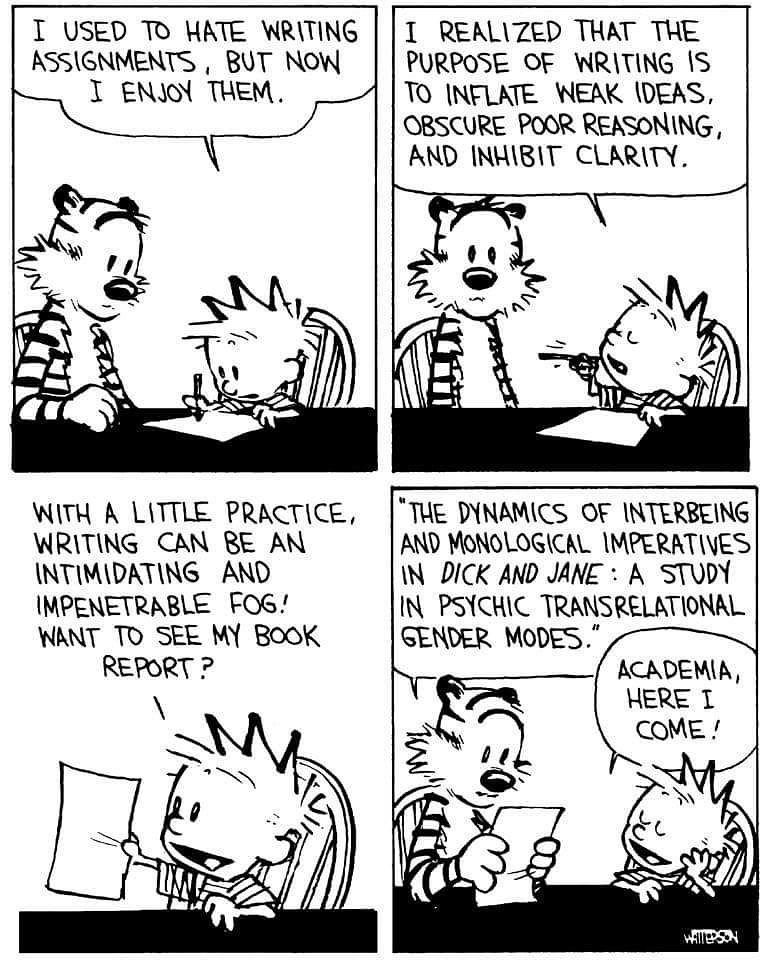
In an earlier era, there were the 'orientalists' from a Europe that had colonized and ruined India, who studied India from the perspective of a superior 'teacher' race. These earlier Indologists have been thoroughly exposed and the new generations of Indologists that are based in the United States are much smarter. They are trained in Sanskrit, have learned from the mistakes of the Orientalists, and have proceeded to cleverly write lengthy papers and analyses using extremely convoluted English (search for example, the pomo generator). Their writings virtually became a code that only their peers, who were part of a mutual back-scratching network, could review, read, understand, and build upon. Alternative new approaches to Hindu studies in the US would be branded as "communal" and "Hindu extremism" by their gatekeepers and shut down. If you, as a graduate scholar, wanted to study Hinduism and get funding, you would have to learn their code language, and thereby also adopt the encoded views about India. Simply put, these Indologists had succeeded in creating their own virtual Enigma machine. This Indology enigma machine is then shipped to third-world India, safe in the knowledge that only the encoders in the US, and their elite disciples in India, would truly know what the messages meant. It became their ultimate inside joke on India. This Indology Enigma in principle is also a fool-proof system like the earlier WW2 model and cracking this code would require sustained, single-minded effort, enormous resources, and a high degree of intelligence to break. They progressed, unhindered for decades, until the breakthrough came in the form of a trained physicist named Rajiv Malhotra.

American Orientalism Decoded

Rajiv Malhotra has lived in the US for more than 40 years and his is another successful Indian immigrant story - he studied physics, but got into IT and Telecom and eventually became the multi-millionaire owner of 20 companies. However, it is what happened afterward that is quite extraordinary. He gave it all up (for one dollar) at the age of 44 to devote his life, full time, to Hindu and Indian studies from an insider perspective. He used his personal funds to set up a research foundation and has over the last few decades, given grants, built up a dedicated home team, and done a deep and thorough study of the Indology landscape from an Indic perspective (and this is really key). While others too have attempted such studies earlier, there is really none else who approached this problem in a single-minded manner, applying scholarly rigor, comprehensive research, and thoroughness. Rajiv Malhotra decided that he would take this up as part of his sva-dharma. He became the perfect storm that was required to crack this Indology Enigma code. Based on more than 20 years of painstaking research, and at a high personal cost, Rajiv Malhotra has authored five epic books on related topics, and we will briefly examine a specific trilogy among them, noting that the very first book, 'Invading the Sacred' demolishes the Freudian psychoanalysis applied to Hindu studies in America. 

The first book in the three we examine here is 'Breaking India', which analyzed the prior Indologists, mostly from Europe, whose theories from the 19th century have devastated Indian politics and sections of society (including in my own home state) for more than a century now. Thus, the initial decoding of Indology by Rajiv ji, while being amazing and successful, is associated with a large time lag between when these virulent messages were encoded and when they were fully decoded. However, his next book 'Indra's Net' that focused on newer but equally diabolical Indology theories reduced this time lag. Here, he was able to expertly decipher the more recent discourse around the spurious idea of 'Neo-Hinduism' being propagated in India over the last few decades. Finally, his latest book, 'The Battle For Sanskrit' was released in India a couple of weeks ago. While this book is yet to release in the US, I have studied several video overviews of its content to realize that it has exposed the ugly face of an  'American Orientalism', a new form of orientalism. 

It is clear that today, Rajiv Malhotra's systematic approach has been able to decipher the output of American Orientalism as it is happening in the US right now. In this desperate intellectual and civilizational Kurukshetra, for the first time ever, practicing Hindus will have actionable intelligence that will enable them to proactively mount a defense before these destructive theories fully percolate into the Indian discourse that is controlled by sepoys - the paid native intellectual gunmen of these western masters.

A new generation of dedicated intellectual Kshatriyas are needed to carry this work forward. Who will join this Battle for our Sanskriti?

References

beingdifferentbook.com
thebattleforsanskrit.com

Comic

Hobbes is nonplussed. Calvin needs Rajiv ji's help!